 EnglishCurrent
 德语
德语 阿拉伯语
阿拉伯语 法语
法语 印尼语
印尼语 日语
日语 韩语
韩语 马来语
马来语 葡萄牙语
葡萄牙语 俄语
俄语 西班牙语
西班牙语 泰语
泰语 土耳其语
土耳其语 越南语
越南语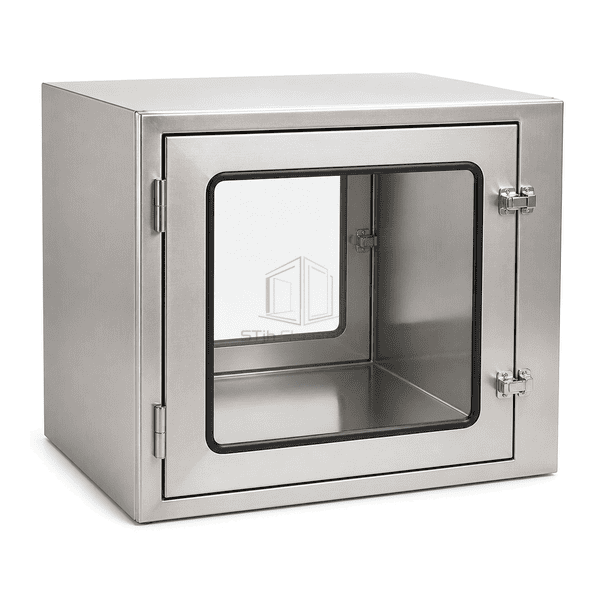
Static Cleanroom Pass Box
A non-ventilated stainless transfer cabinet that separates two rooms through sealed, interlocked doors.



Move materials between cleanroom zones with fewer personnel entries. Explore static, HEPA-filtered, VHP and specialized pass boxes, with chamber sizes, door layouts and transfer arrangements suited to your payload and process.
Start with the operating task and site constraints, then compare the product direction that best matches the intended use.
| Buyer requirement | Product direction | Why it helps |
|---|---|---|
| Simple transfer between compatible clean zones | Static pass box or transfer hatch | Payload size and door interlocking |
| Filtered chamber without site ductwork | Self-contained HEPA pass box | Power and filter service access |
| Continuous controlled airflow over payload | Dynamic or unidirectional-flow pass box | Airflow direction and room pressures |
| Remove loose particles from compatible packages | Material air-shower pass box | Packaging durability and cycle time |
| Timed accessible-surface treatment | UV-C material treatment pass box | Shadowing and material compatibility |
| VHP-compatible transfer cycle | VHP pass box | Cycle interfaces, sealing and aeration |
| Containment or controlled leakage direction | Biosafety, negative- or positive-pressure pass box | Supply/exhaust strategy and service access |
| Large, refrigerated or special-area transfer | Application-specific chamber | Payload, temperature and project conditions |
Narrow your choices by the features that matter to your application. View specifications and add suitable models to your inquiry list for a tailored quote.
A non-ventilated stainless transfer cabinet that separates two rooms through sealed, interlocked doors.
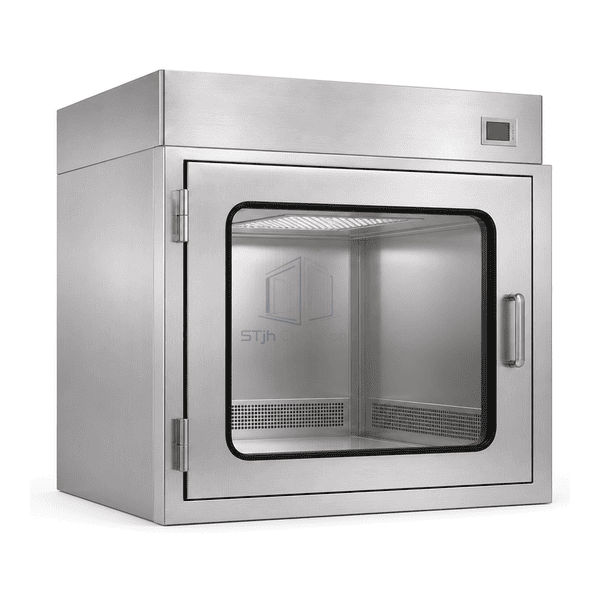
An active transfer cabinet that recirculates filtered air through its interlocked material chamber.
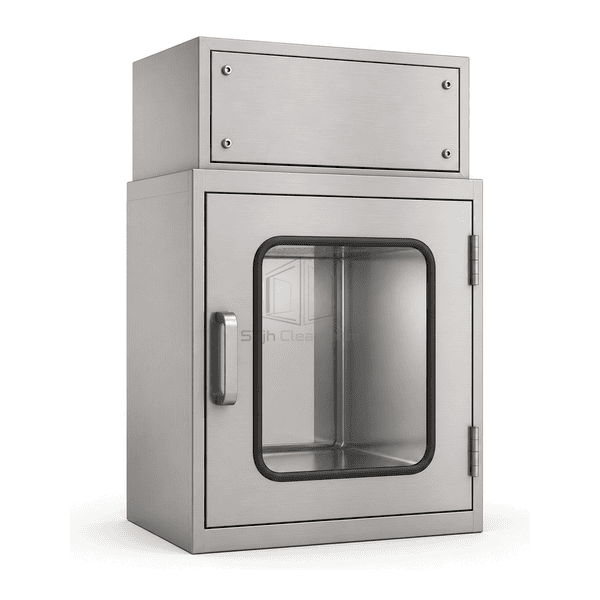
A compact plug-in pass box with an integral HEPA fan-filter cassette for locations without available ductwork.
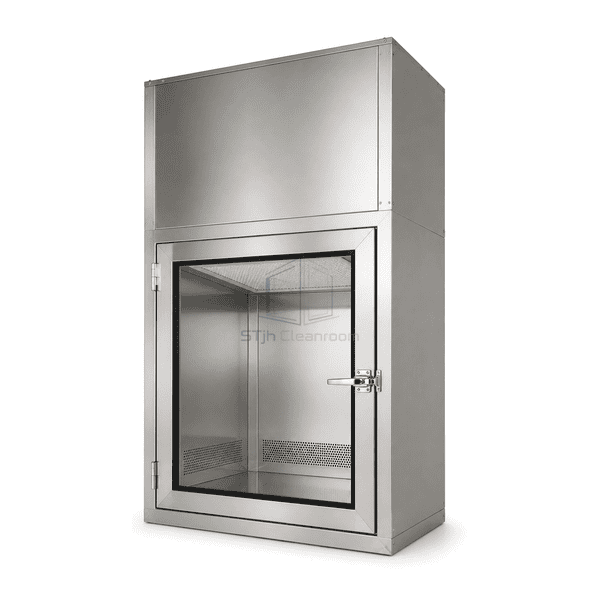
A pass box that delivers a broad vertical filtered airflow over the payload and returns it through low-level channels.
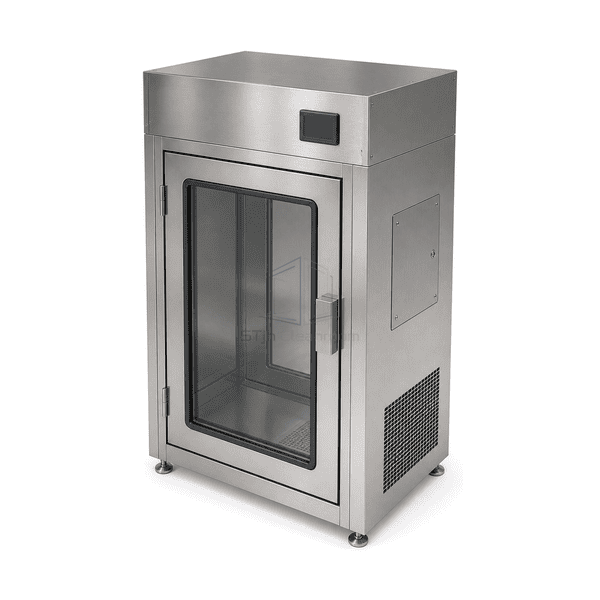
A timed material chamber that uses filtered cleaning jets and return grilles to remove loose particles from compatible packages.
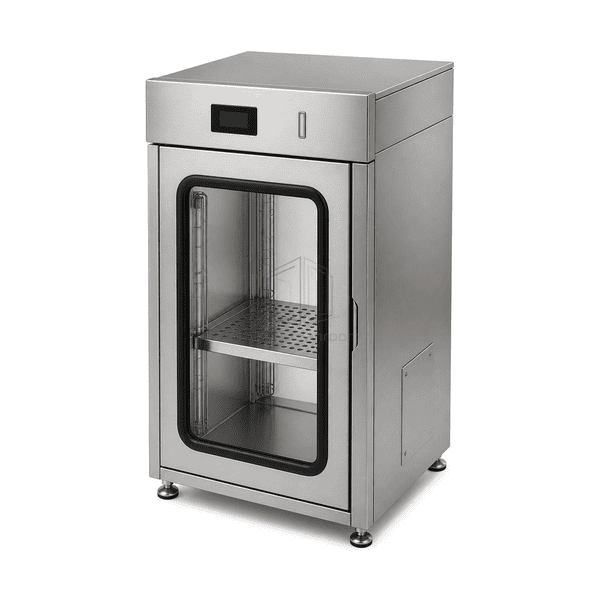
An interlocked transfer chamber with shielded UV-C lamps for timed treatment of accessible surfaces on compatible materials.
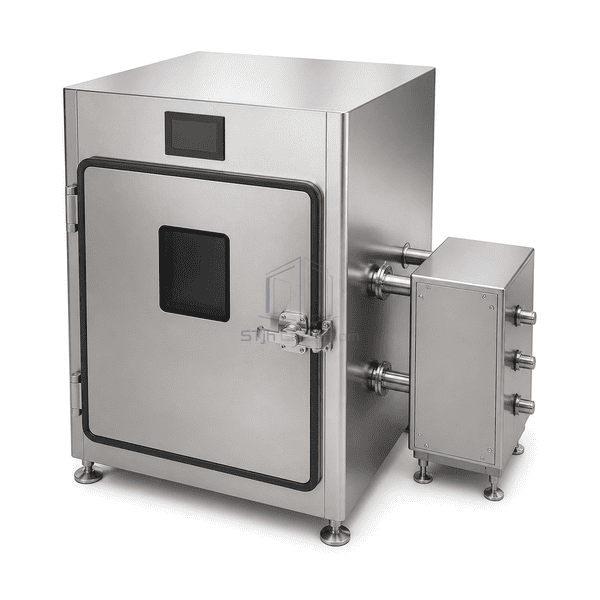
An airtight material chamber that connects to an integrated or remote VHP process for conditioned exposure and aeration.
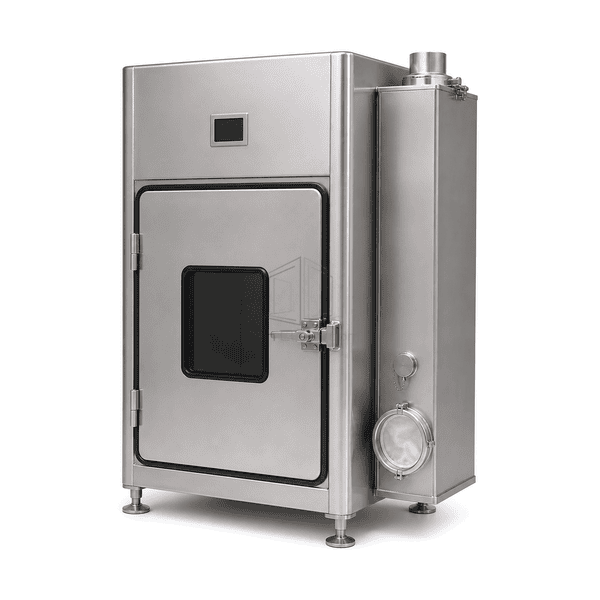
A sealed, pressure-controlled transfer chamber with filtered exhaust and service features intended for biosafety boundaries.
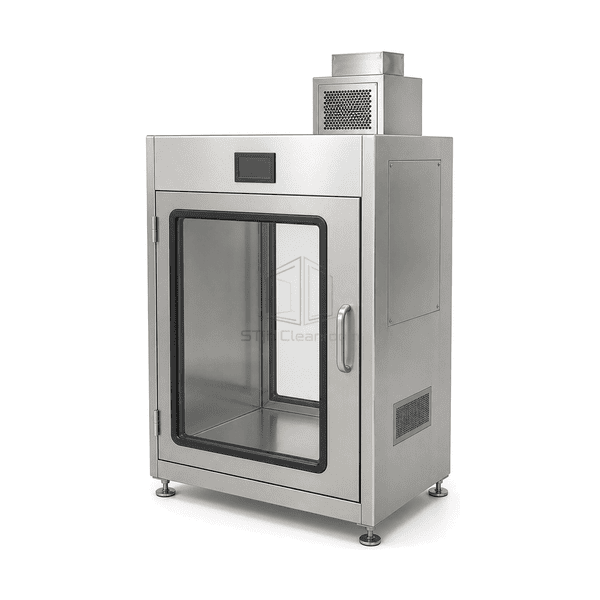
A transfer chamber held below adjacent-room pressure so leakage is drawn inward and routed to filtered exhaust.
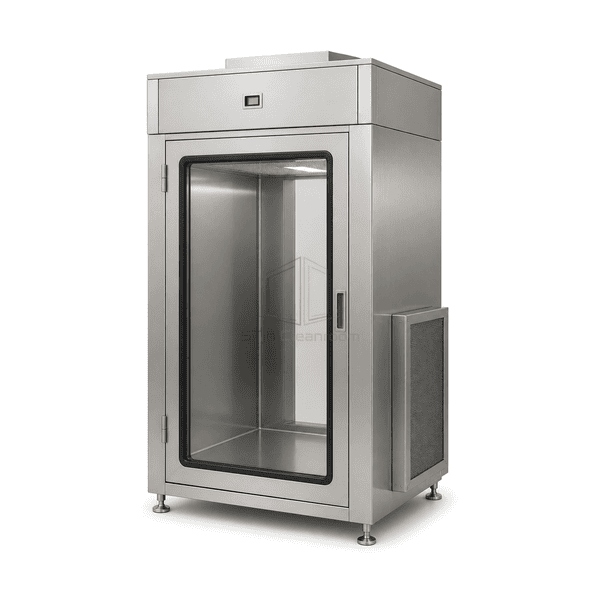
A filtered-supply pass box maintained above adjacent pressure to reduce inward contamination towards sensitive payloads.
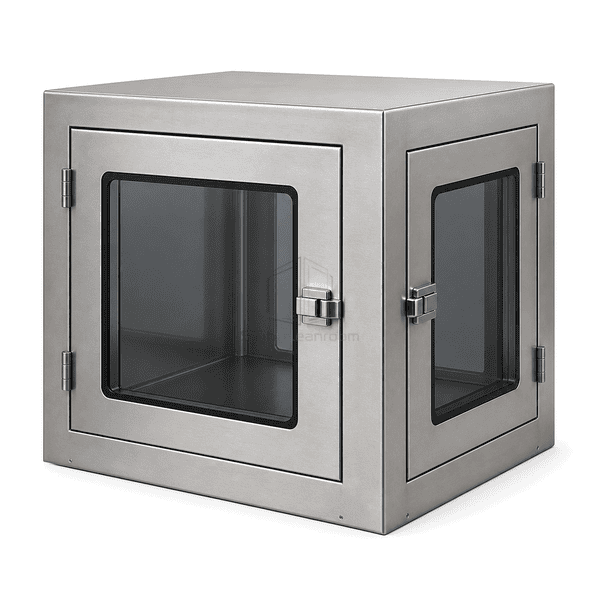
A single shared transfer chamber with three doors on different sides and one-door-at-a-time interlocking.
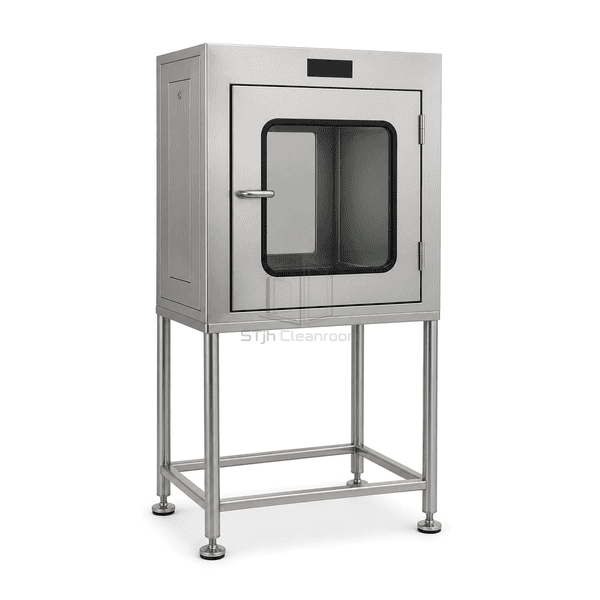
A reinforced, floor-supported cleanroom pass box for transferring larger loads at a practical handling height.
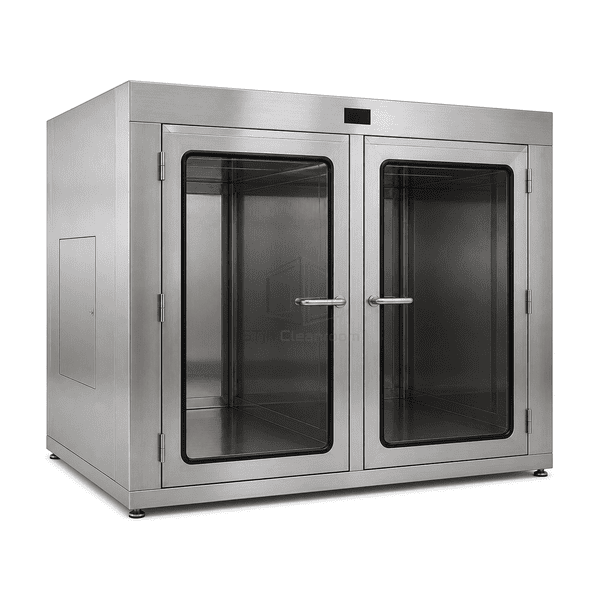
An oversized interlocked chamber for moving carts, equipment and large packaged materials between controlled rooms.
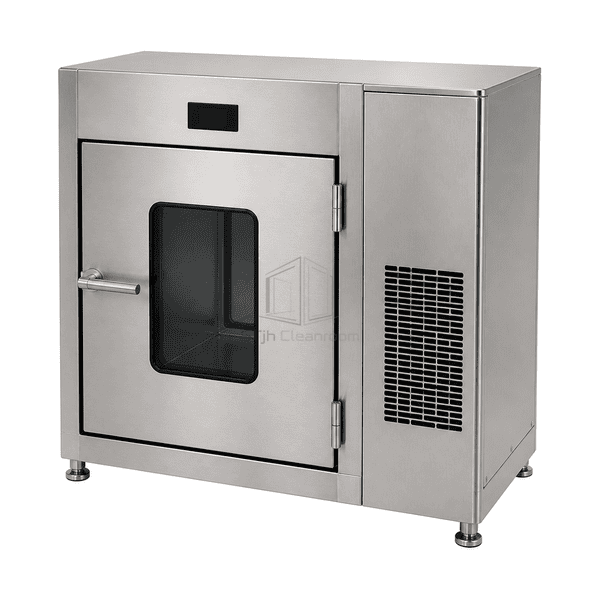
An insulated, temperature-controlled pass box for short transfers of compatible temperature-sensitive materials.
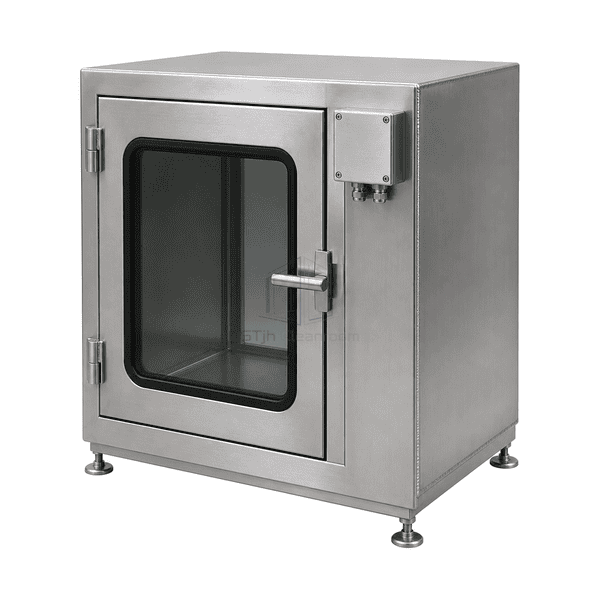
A configurable sealed pass box for controlled transfer at hazardous process boundaries, without assigning a specific area classification.
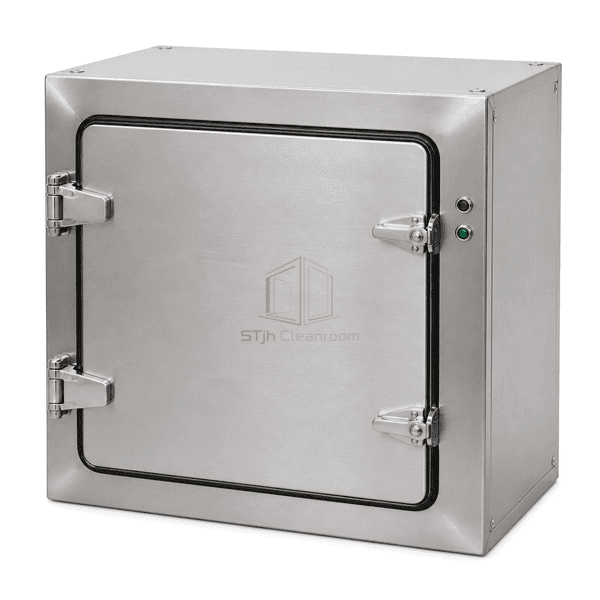
A high-seal stainless transfer chamber with compression-gasket doors for moving materials across critical pressure or containment boundaries.
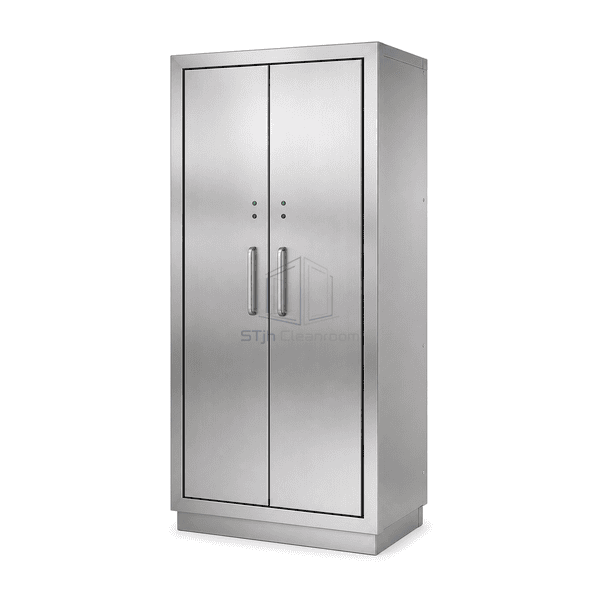
A tall double-door transfer cabinet with adjustable stainless shelving for batch restocking without personnel crossing the cleanroom boundary.
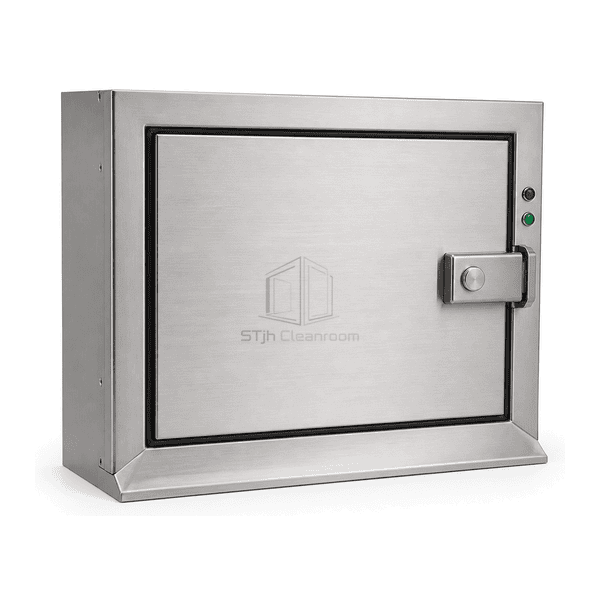
A shallow wall-mounted transfer hatch for documents, sealed packs and small components where a full-depth pass box is unnecessary.
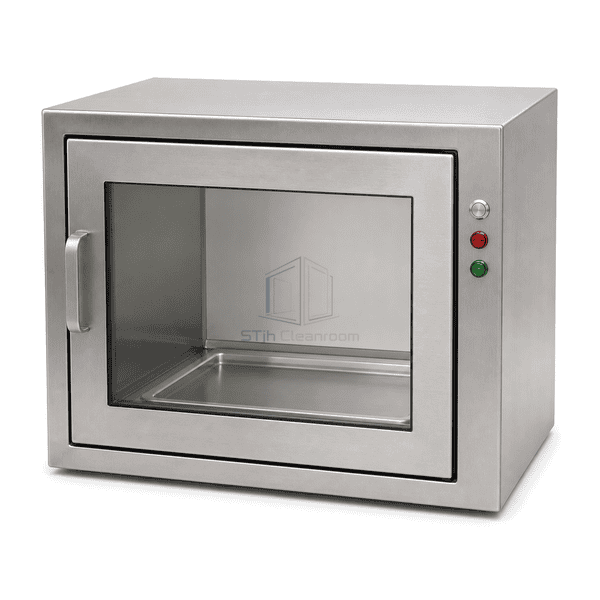
A compact interlocked chamber with a removable sample tray for controlled transfer of labelled specimens between collection and laboratory areas.
A pass box should be selected around the payload, room pressure relationship and required chamber process rather than by external size alone.
A static pass box provides an interlocked transfer chamber without active recirculating airflow. A dynamic model adds filtered airflow to control the chamber environment during transfer.
Pressure control is considered when the transfer boundary must favour payload protection or containment. The adjacent-room pressures and exhaust or supply strategy must be reviewed together.
Yes. Floor-standing and large transfer chambers can be coordinated around the payload envelope, handling height, door arrangement and available structural opening.
No. Treatment selection depends on material compatibility, surface exposure, packaging and the intended process. Those conditions must be confirmed for each project.
Share your payload dimensions, room conditions and transfer frequency. We will help you choose a suitable chamber configuration and quote your requirements.