
 EnglishCurrent
 德语
德语 阿拉伯语
阿拉伯语 法语
法语 印尼语
印尼语 日语
日语 韩语
韩语 马来语
马来语 葡萄牙语
葡萄牙语 俄语
俄语 西班牙语
西班牙语 泰语
泰语 土耳其语
土耳其语 越南语
越南语

Cleanroom Air Distribution Systems
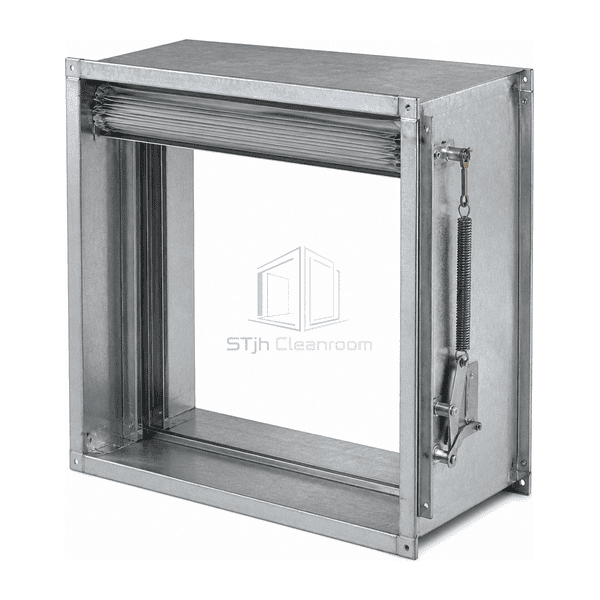
Dynamic Fire Damper
A thermally released curtain damper with spring-assisted closure for isolating a duct penetration while the ventilation system may still be moving air.
- Spring-Driven Dynamic Closure
- Interlocking Curtain Blades
- Thermal Release Mechanism
- Compact Sleeve Installation
Product Introduction
The dynamic fire damper stores a folded stack of interlocking galvanized blades outside the normal airway. Under ordinary ventilation the curtain is held open by a thermal release. When released, stainless closure springs draw the blade stack across the opening and lock the interlocking folds into the guide channels. A factory sleeve and retaining-angle arrangement positions the damper at the wall or floor penetration while leaving access to the release and blade track for periodic inspection.
Key Features
Interlocking galvanized blade folds form a continuous closure across the opening after release.
The open blade stack remains outside the clear airway to minimize normal pressure drop.
Sleeve, retaining-angle and access options adapt the damper to common wall and floor penetration details.
Customer Product Concerns
A fire damper must be installed square at the protected penetration, retain unobstructed curtain travel and keep its thermal release accessible for inspection.
A static-only curtain may not close reliably against airflow from a fan that remains operating.Closure springs add force to pull the dynamic curtain through the moving airstream.
Mortar, fasteners or a distorted sleeve obstruct the blade guide channels.Specified clearance, protected tracks and square retaining angles preserve the curtain travel path.
The folded blade stack projects into the duct and creates unnecessary pressure loss.An out-of-airway curtain pocket keeps the open blades clear of the normal flow area.
The thermal link cannot be reached after the ceiling is closed.A coordinated access panel exposes the release, blade stack and track for visual and functional checks.
Typical Applications
Cleanroom duct fire-compartment penetrationsHospital supply and return ductsLaboratory exhaust boundariesPharmaceutical facility shaftsCommercial HVAC wall and floor openings
Technical Parameters
Representative construction ranges for a rectangular spring-assisted curtain fire damper are shown below.
| Core Material | Interlocking galvanized-steel curtain blades with stainless closure springs and thermal release |
|---|---|
| Panel Thickness | 0.7–1.0 mm formed interlocking curtain blade sheet |
| Effective Width | 152–914 mm nominal single-section clear opening width |
| Maximum Length | Up to 1219 mm nominal single-section opening height |
| Steel Facing Thickness | 1.2–1.5 mm galvanized sleeve, frame and retaining components |
| Core Density | Approximately 7850 kg/m³ for the steel curtain blades |
| Thermal Conductivity | Approximately 45–55 W/(m·K) for galvanized carbon steel |
| Surface Finish | Mill-galvanized curtain, sleeve and frame with corrosion-resistant spring hardware |
| Joint Type | Sleeved penetration frame with spring-driven interlocking curtain, side tracks and thermal release |
| Customization | Available based on the intended application and operating environment. |
Available Options
Vertical wall or horizontal floor orientationThermal release temperature selectionFactory sleeve and retaining anglesOpen-close indication switch
Planning a Dynamic Fire Damper specification?
Send us your dimensions, installation conditions, performance targets and required surface finish.