
 EnglishCurrent
 德语
德语 阿拉伯语
阿拉伯语 法语
法语 印尼语
印尼语 日语
日语 韩语
韩语 马来语
马来语 葡萄牙语
葡萄牙语 俄语
俄语 西班牙语
西班牙语 泰语
泰语 土耳其语
土耳其语 越南语
越南语

Laminar Flow and Containment Equipment
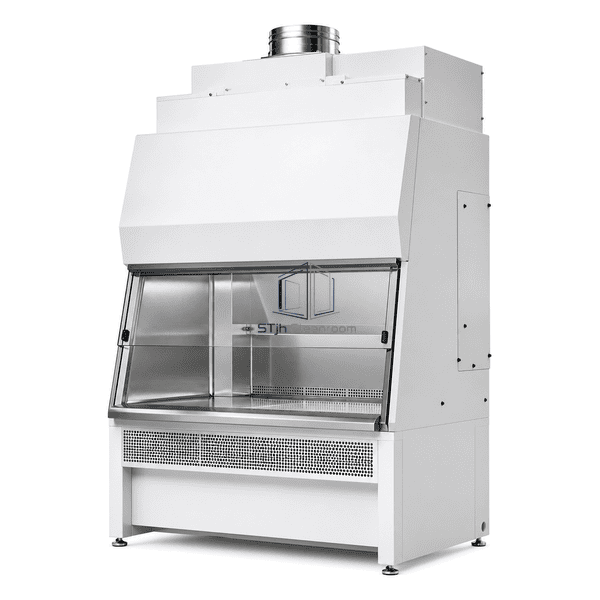
Class II Type B2 Biological Safety Cabinet
A total-exhaust Class II cabinet that sends all work-zone air through a dedicated building exhaust connection without recirculating it inside the cabinet.
- 100 Percent Total Exhaust
- Hard-Duct Building Connection
- HEPA-Filtered Supply Downflow
- Exhaust Interlock Monitoring
Product Introduction
The Type B2 cabinet combines inward face airflow with filtered vertical downflow, then sends the entire cabinet air volume to a dedicated building exhaust system. No work-zone air is recirculated within the cabinet. The supply blower and facility exhaust must remain balanced, and an exhaust-loss interlock warns or stops cabinet operation if the external system fails. The configuration can support biological work involving limited evaluated volatile chemicals when the complete installation and procedure are suitable.
Key Features
A dedicated supply HEPA stage provides clean vertical air over the product.
Exhaust-loss monitoring protects the inward containment boundary.
Negative-pressure plenums enclose contaminated internal air paths.
A serviceable exhaust transition coordinates the cabinet with building ductwork.
Customer Product Concerns
A B2 cabinet depends on the building exhaust system, so cabinet airflow, room balance and duct performance must operate together.
Exhaust failure reverses or weakens face containment.An exhaust interlock alarms and can disable the cabinet supply when duct flow is lost.
Building airflow changes disturb cabinet balance.A coordinated exhaust valve and pressure sensing stabilize the cabinet connection.
Heat and conditioned air are continuously exhausted.Efficient EC blowers and correctly sized duct control reduce avoidable energy demand.
Users assume any chemical quantity is acceptable.The application is limited to substances and quantities evaluated for the complete exhaust installation.
Typical Applications
Biological work with evaluated volatile chemical useToxicological studiesPharmaceutical microbiology requiring total exhaustSpecialized clinical laboratory procedures
Technical Parameters
Typical configurable construction ranges for a Class II Type B2 biological safety cabinet are listed below.
| Core Material | SUS316L work-zone liner with powder-coated steel outer shell and mineral-wool insulated supply and exhaust plenums |
|---|---|
| Panel Thickness | 40-75 mm double-skin supply and exhaust sections |
| Effective Width | 1200-1800 mm clear working width |
| Maximum Length | Up to 2600 mm overall cabinet height including exhaust transition |
| Steel Facing Thickness | 1.2-1.5 mm SUS316L inner liner; 1.0-1.2 mm outer steel |
| Core Density | 100-140 kg/m³ mineral-wool plenum insulation |
| Thermal Conductivity | 0.035-0.045 W/(m·K) for the mineral-wool insulation |
| Surface Finish | Fine-brushed SUS316L work zone with sealed white powder-coated exterior |
| Joint Type | Welded negative-pressure inner plenums with gasketed HEPA frames and flanged hard-duct exhaust transition |
| Customization | Available based on the intended application and operating environment. |
Available Options
1200 or 1800 mm work widthMotorized sashBuilding exhaust control valveSUS304 or SUS316L work zone
Planning a Class II Type B2 Biological Safety Cabinet specification?
Send us your dimensions, installation conditions, performance targets and required surface finish.