
 EnglishCurrent
 德语
德语 阿拉伯语
阿拉伯语 法语
法语 印尼语
印尼语 日语
日语 韩语
韩语 马来语
马来语 葡萄牙语
葡萄牙语 俄语
俄语 西班牙语
西班牙语 泰语
泰语 土耳其语
土耳其语 越南语
越南语

Laminar Flow and Containment Equipment
Class III Biological Safety Cabinet
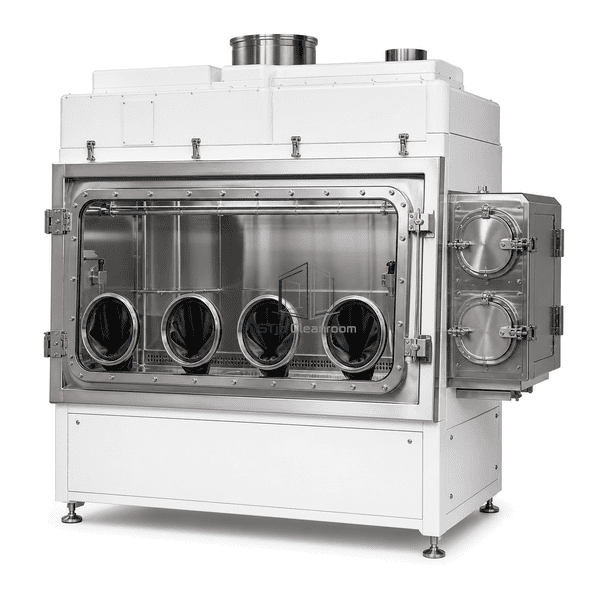
A closed gas-tight biological safety glovebox that separates the operator from the work through fixed gloves, negative pressure and controlled transfer ports.
- Gas-Tight Stainless Chamber
- Fixed Glove and Sleeve Ports
- Negative-Pressure Operation
- Controlled Double-Door Transfer
Product Introduction
The Class III cabinet is a fully enclosed stainless steel glovebox operated under negative pressure. Manipulation is performed through fixed glove and sleeve assemblies rather than an open front sash. Materials enter through an interlocked double-door pass chamber or other sealed transfer interface, and exhaust air passes through high-efficiency filtration before connection to the facility exhaust. Welded chamber seams, pressure monitoring and glove integrity management form the physical containment boundary.
Key Features
Replaceable glove and sleeve assemblies support manipulation without opening the cabinet.
A double-door transfer chamber controls material entry and removal.
Negative pressure directs any inward leakage toward the filtered exhaust.
Pressure-hold and glove-integrity connections support routine barrier checks.
Customer Product Concerns
A gas-tight glovebox depends on every welded seam, glove port, transfer door and exhaust connection remaining part of one controlled barrier.
Opening the main chamber would break the containment boundary.A double-door transfer chamber moves materials without opening the operator workspace.
Gloves are the most frequently stressed barrier component.Replaceable port rings and integrity-test connections support routine glove management.
A positive leak could release chamber air.Negative pressure directs leakage inward toward the filtered exhaust.
Internal corners are difficult to decontaminate.Welded radiused stainless geometry reduces inaccessible crevices.
Typical Applications
High-risk biological researchContained pathogen manipulationSpecialized animal or sample processingClosed biological procedure development
Technical Parameters
Typical configurable construction ranges for a Class III biological safety cabinet are listed below.
| Core Material | Fully welded SUS316L chamber with laminated safety-glass viewing panel and butyl or CSM glove assemblies |
|---|---|
| Panel Thickness | 40-80 mm double-skin chamber and service sections |
| Effective Width | 1200-3000 mm usable glovebox width |
| Maximum Length | Up to 4000 mm overall chamber length |
| Steel Facing Thickness | 2.0-3.0 mm welded SUS316L chamber shell |
| Core Density | Approximately 8000 kg/m³ for SUS316L chamber material |
| Thermal Conductivity | 14-16 W/(m·K) for austenitic stainless steel |
| Surface Finish | Electropolished SUS316L interior with radiused welded corners |
| Joint Type | Continuously welded pressure-tight chamber with sealed glove rings, double-door transfer hatch and flanged exhaust |
| Customization | Available based on the intended application and operating environment. |
Available Options
Two to eight glove positionsPass-through autoclave interfaceDunk tank or rapid transfer portIntegrated pressure-hold test connections
Planning a Class III Biological Safety Cabinet specification?
Send us your dimensions, installation conditions, performance targets and required surface finish.