 EnglishCurrent
 德语
德语 阿拉伯语
阿拉伯语 法语
法语 印尼语
印尼语 日语
日语 韩语
韩语 马来语
马来语 葡萄牙语
葡萄牙语 俄语
俄语 西班牙语
西班牙语 泰语
泰语 土耳其语
土耳其语 越南语
越南语

Cleanroom Control and Environmental Monitoring Systems
Occupancy Sensor
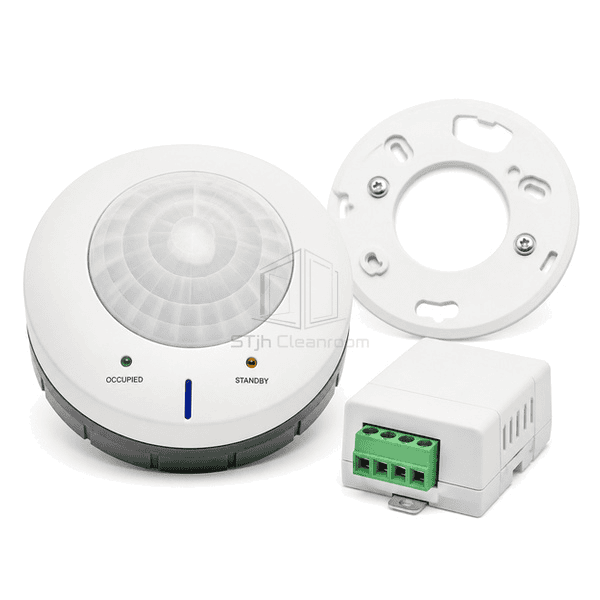
A low-profile ceiling or wall sensor that detects room use for lighting control, airflow setback and occupancy status without requiring user contact.
- PIR or Dual-Technology Detection
- Low-Profile Ceiling Housing
- Adjustable Time Delay
- Lighting and HVAC Outputs
Product Introduction
The cleanroom occupancy sensor detects motion or presence using passive infrared, ultrasonic or combined technology. A smooth, low-profile housing limits exposed ledges while the optical lens covers the selected room area. Adjustable sensitivity, timeout and daylight interaction prevent brief absence from switching controlled systems too aggressively. Dry-contact, low-voltage or network output can command lighting, signal room-use status or request a defined HVAC setback mode while critical minimum ventilation remains under the primary airflow controls.
Key Features
A shallow sealed-looking enclosure suits clean ceilings and exposed cleanroom walls.
Configurable timeout avoids rapid switching during short periods of limited movement.
Separate lighting and occupancy outputs support coordinated but independent control actions.
Customer Product Concerns
Occupancy sensing must cover the actual work area without reacting through doorways or reducing critical cleanroom ventilation below safe minimums.
A sensor turns lights off while a seated operator makes little movement.Dual-technology detection and suitable sensitivity improve presence recognition.
Movement in the corridor triggers an empty cleanroom.Coverage masking and considered mounting keep the detection field inside the intended room.
A short absence causes unnecessary airflow and lighting cycling.Adjustable delay holds the occupied state through brief departures.
An occupancy command overrides the minimum cleanroom air-change requirement.The sensor requests only a defined setback mode while minimum airflow limits remain in the HVAC controller.
Typical Applications
Occupancy-based cleanroom lighting controlAirflow setback requestsLaboratory occupancy statusClean corridor lighting
Technical Parameters
Typical materials and dimensions for a low-profile cleanroom occupancy sensor are shown below.
| Core Material | Pyroelectric PIR element with Fresnel lens in flame-retardant polycarbonate housing |
|---|---|
| Panel Thickness | 30-55 mm sensor depth |
| Effective Width | 90-140 mm sensor diameter or width |
| Maximum Length | Up to 160 mm housing dimension |
| Steel Facing Thickness | 0 mm; non-metallic ceiling or wall enclosure |
| Core Density | 1180-1220 kg/m³ for polycarbonate housing |
| Thermal Conductivity | 0.19-0.22 W/(m·K) for polycarbonate enclosure material |
| Surface Finish | Matte white low-profile housing with translucent white optical lens |
| Joint Type | Twist-lock ceiling base or wall bracket with pluggable control terminal |
| Customization | Available based on the intended application and operating environment. |
Available Options
PIR or dual-technology sensingCeiling or wall mountingDry contact or network outputDaylight hold-off input
Planning a Occupancy Sensor specification?
Send us your dimensions, installation conditions, performance targets and required surface finish.