 EnglishCurrent
 德语
德语 阿拉伯语
阿拉伯语 法语
法语 印尼语
印尼语 日语
日语 韩语
韩语 马来语
马来语 葡萄牙语
葡萄牙语 俄语
俄语 西班牙语
西班牙语 泰语
泰语 土耳其语
土耳其语 越南语
越南语

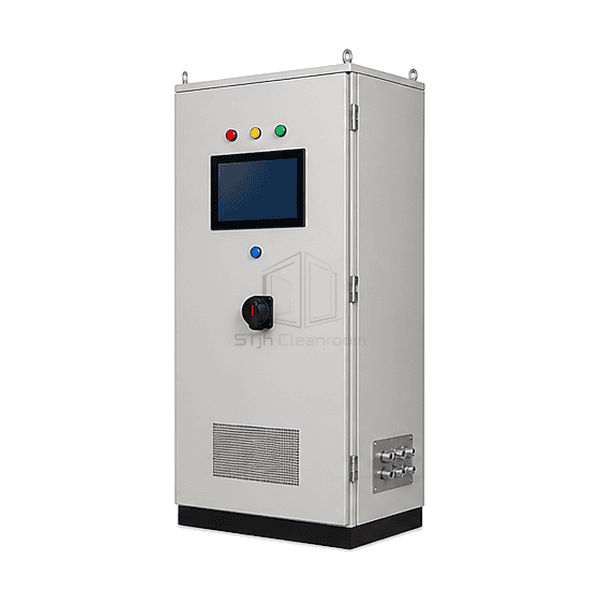
FFU and Terminal Air Purification Equipment
FFU Central Control System
A floor-standing control cabinet that supervises multiple FFU zones through an industrial HMI, protected power distribution and building-network communication.
- Multi-Zone HMI Control
- Central Alarm Overview
- Operating Data Logging
- BACnet or Modbus Interface
Product Introduction
The FFU central control system consolidates cleanroom fan commands, feedback and alarms in a lockable electrical cabinet. An industrial touchscreen presents zone status, airflow or speed setpoints and maintenance warnings, while internal PLC, power supplies, circuit protection and network repeaters distribute commands to field-connected EC fan filter units. The architecture can place routine room operation on the HMI and pass selected points to the building management system. Separate power and communication terminals simplify commissioning and isolate a field wiring fault from the supervisory electronics.
Key Features
PLC-based sequences can apply occupied, standby and recovery setpoints to different cleanroom areas.
Logged fan hours, alarm events and selected environmental points support maintenance planning.
Isolated BACnet or Modbus communication exchanges approved status and command points with the BMS.
Customer Product Concerns
A large FFU installation becomes difficult to operate when individual units lack common setpoints, fault visibility and a controlled interface to the building system.
Operators walk through multiple rooms to change hundreds of local fan settings.The central HMI applies commands to defined FFU zones from one supervised interface.
A failed fan remains unnoticed until particle control is affected.Motor feedback and communication alarms identify the affected address and zone promptly.
Night operation consumes full fan power even when contamination loads are low.Scheduled occupied and standby modes reduce selected EC fan setpoints without shutting down monitoring.
Direct BMS commands can conflict with local cleanroom operating sequences.A defined gateway exposes selected points while the PLC retains interlocks and command priorities.
Typical Applications
Large semiconductor FFU ceilingsMulti-room pharmaceutical facilitiesBattery dry-room clean zonesDisplay and optics manufacturingCentral cleanroom operations centres
Technical Parameters
Representative enclosure and electronics ranges for an FFU central control system are listed below.
| Core Material | Industrial PLC, touchscreen HMI, 24 VDC power supplies, protected distribution and isolated RS-485/Ethernet gateways |
|---|---|
| Panel Thickness | 180-300 mm control-cabinet depth |
| Effective Width | 600-1000 mm nominal cabinet width |
| Maximum Length | Up to 1800 mm cabinet height for expanded power and communication sections |
| Steel Facing Thickness | 1.5-2.0 mm powder-coated steel enclosure and hinged front door |
| Core Density | Approximately 1800-1900 kg/m³ nominal density of the FR-4 substrate used in the central control board |
| Thermal Conductivity | Approximately 0.25-0.40 W/(m·K) through the FR-4 substrate inside the FFU central controller |
| Surface Finish | Light-grey or cleanroom-white epoxy-polyester powder-coated cabinet with sealed HMI bezel |
| Joint Type | Gasketed hinged door, DIN-rail terminal blocks, separated gland plates and pluggable field connectors |
| Customization | Available based on the intended application and operating environment. |
Available Options
Wall-mount or floor-standing cabinetBACnet MS/TP, Modbus RTU or Ethernet gatewayDifferential pressure and temperature inputsRemote web dashboard and event logging
Planning a FFU Central Control System specification?
Send us your dimensions, installation conditions, performance targets and required surface finish.