
 EnglishCurrent
 德语
德语 阿拉伯语
阿拉伯语 法语
法语 印尼语
印尼语 日语
日语 韩语
韩语 马来语
马来语 葡萄牙语
葡萄牙语 俄语
俄语 西班牙语
西班牙语 泰语
泰语 土耳其语
土耳其语 越南语
越南语

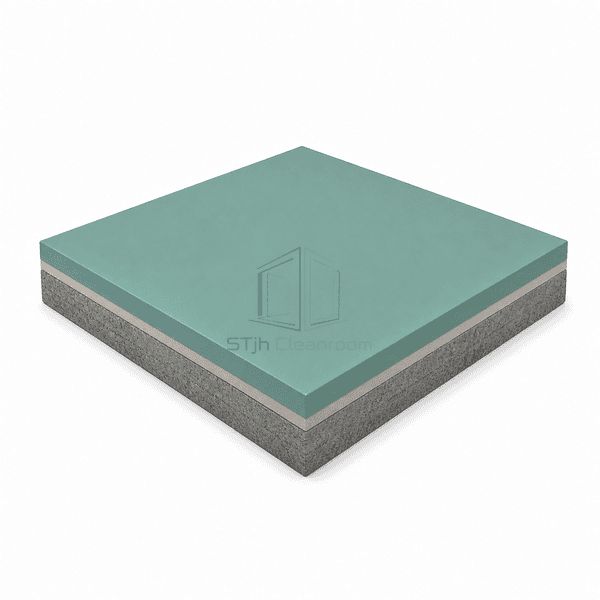
Cleanroom Flooring Systems
Polyurethane Self-Leveling Flooring
A solvent-free, tough-elastic polyurethane wearing layer that flows smooth while accommodating limited substrate movement and repeated footfall.
- Tough-Elastic Resin
- Crack-Bridging Capacity
- Comfortable Footfall
- Smooth Low-VOC Finish
Product Introduction
Polyurethane self-leveling flooring uses a two-component, pigmented elastic resin that flows into a smooth continuous wearing layer. Compared with rigid epoxy, the cured polyurethane provides greater elongation and can accommodate limited non-moving cracks or substrate strain when installed as part of a compatible system. Its quieter, slightly resilient feel suits healthcare, laboratory and clean circulation spaces with prolonged pedestrian use. A wear-resistant polyurethane topcoat controls sheen, color retention and cleaning response while integral coves eliminate exposed perimeter joints.
Key Features
The smooth self-leveling body coat produces a continuous surface suited to frequent pedestrian cleaning routes.
Slight resilience improves underfoot comfort and reduces the sharp impact sound of carts and footsteps.
A compatible polyurethane topcoat provides the selected satin or matte appearance and additional wear protection.
Customer Product Concerns
Rigid flooring can mirror minor slab movement and feel harsh in rooms dominated by pedestrian circulation rather than heavy process loads.
Minor substrate strain produces visible hairline cracks in a rigid resin finish.The tough-elastic polyurethane layer provides higher elongation and limited crack-bridging capacity.
Long clean corridors amplify trolley and footfall noise.The resilient wearing layer softens impact transmission compared with a hard mineral-rich screed.
Open sheet-floor seams become difficult to clean at room perimeters.The liquid-applied surface continues seamlessly into a compatible cove detail.
A high-gloss surface shows every scuff in a public-facing controlled area.Satin and matte polyurethane topcoats reduce glare and provide a more forgiving maintenance appearance.
Typical Applications
Healthcare clean corridorsResearch laboratoriesMedical-device assembly spacesPharmaceutical offices and support roomsLight production and inspection areas
Technical Parameters
Typical ranges for a filled, self-smoothing polyurethane floor with a protective topcoat are listed below.
| Core Material | Two-part solvent-free tough-elastic polyurethane resin with fine quartz filler |
|---|---|
| Panel Thickness | 1.5–3.0 mm self-leveling polyurethane system thickness |
| Effective Width | Typically 2500–4500 mm flow-applied bay width |
| Maximum Length | Typically up to 16000 mm continuous run between retained movement joints |
| Steel Facing Thickness | 0 mm; the seamless floor uses no steel facing |
| Core Density | Approximately 1400–1650 kg/m³ for mixed and filled polyurethane |
| Thermal Conductivity | Typically 0.20–0.32 W/(m·K) for the cured polyurethane layer |
| Surface Finish | Smooth satin or matte pigmented polyurethane topcoat over the self-leveling body |
| Joint Type | Primer-bonded seamless body coat with polyurethane topcoat, coved edges and active joints carried through |
| Customization | Available based on the intended application and operating environment. |
Available Options
Satin, matte or low-gloss topcoatStandard or enhanced crack-bridging buildIntegral cove and contrasting wall baseDecorative color zoning and fine slip texture
Planning a Polyurethane Self-Leveling Flooring specification?
Send us your dimensions, installation conditions, performance targets and required surface finish.