
 EnglishCurrent
 德语
德语 阿拉伯语
阿拉伯语 法语
法语 印尼语
印尼语 日语
日语 韩语
韩语 马来语
马来语 葡萄牙语
葡萄牙语 俄语
俄语 西班牙语
西班牙语 泰语
泰语 土耳其语
土耳其语 越南语
越南语

Cleanroom Control and Environmental Monitoring Systems
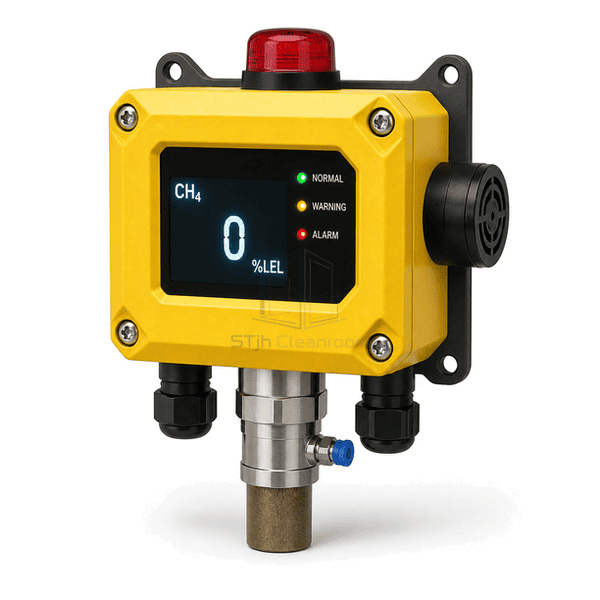
Combustible Gas Sensor
A fixed percent-LEL gas detector that monitors flammable gas or vapor accumulation and activates local and remote alarms before hazardous concentration develops.
- Percent-LEL Monitoring
- Catalytic or Infrared Sensor
- Local Warning and Alarm
- Remote Shutdown Outputs
Product Introduction
The fixed combustible gas detector measures a selected flammable gas using a catalytic bead or infrared absorption sensor. Its display presents concentration as a percentage of the lower explosive limit, while independent warning and alarm thresholds can start ventilation, isolate gas supply or activate evacuation indication. A flame-resistant sintered inlet protects the sensing element while allowing gas diffusion. Infrared versions are well suited to many hydrocarbons and resist poisoning mechanisms that can affect catalytic elements; catalytic versions provide broad combustible-gas response where oxygen is present.
Key Features
Catalytic and infrared sensing choices address different gas families and operating conditions.
A sintered metal inlet protects the active element while permitting ambient gas diffusion.
Alarm relays and analog or digital outputs support ventilation and gas-isolation actions.
Customer Product Concerns
Combustible gas detection must account for the target gas, sensor technology, oxygen availability and potential catalyst poisons.
A catalytic sensor is exposed to silicone or sulfur compounds that reduce sensitivity.Sensor-technology selection and planned response checks address known catalyst-poison risks.
The chosen infrared sensor does not respond to the target gas family.The optical wavelength and calibration gas are matched to the expected combustible compound.
A gas leak reaches the ceiling or floor before the detector location.Detector height follows gas density, release pressure and room-air movement.
The local detector alarms but ventilation or gas shutoff does not respond.Dedicated relay outputs link warning and alarm thresholds to engineered control actions.
Typical Applications
Solvent-use cleanroom supportHydrogen utility roomsFlammable gas cabinetsBattery and process equipment areas
Technical Parameters
Typical construction values for a fixed combustible gas detector are listed below.
| Core Material | Catalytic bead or infrared optical cell in coated aluminum transmitter with stainless sintered sensor inlet |
|---|---|
| Panel Thickness | 80-140 mm detector depth |
| Effective Width | 130-220 mm transmitter width |
| Maximum Length | Up to 320 mm overall detector height |
| Steel Facing Thickness | 0.8-1.2 mm stainless guard and mounting hardware |
| Core Density | 2650-2750 kg/m³ for aluminum transmitter body |
| Thermal Conductivity | 150-220 W/(m·K) for aluminum enclosure material |
| Surface Finish | Safety-yellow or gray coated aluminum body with black display and red alarm beacon |
| Joint Type | Threaded sintered sensing head with sealed conduit entries and removable relay terminals |
| Customization | Available based on the intended application and operating environment. |
Available Options
Catalytic or infrared sensorTarget-gas calibrationLocal display and beaconRelay, analog and digital outputs
Planning a Combustible Gas Sensor specification?
Send us your dimensions, installation conditions, performance targets and required surface finish.