
 EnglishCurrent
 德语
德语 阿拉伯语
阿拉伯语 法语
法语 印尼语
印尼语 日语
日语 韩语
韩语 马来语
马来语 葡萄牙语
葡萄牙语 俄语
俄语 西班牙语
西班牙语 泰语
泰语 土耳其语
土耳其语 越南语
越南语

Cleanroom Control and Environmental Monitoring Systems
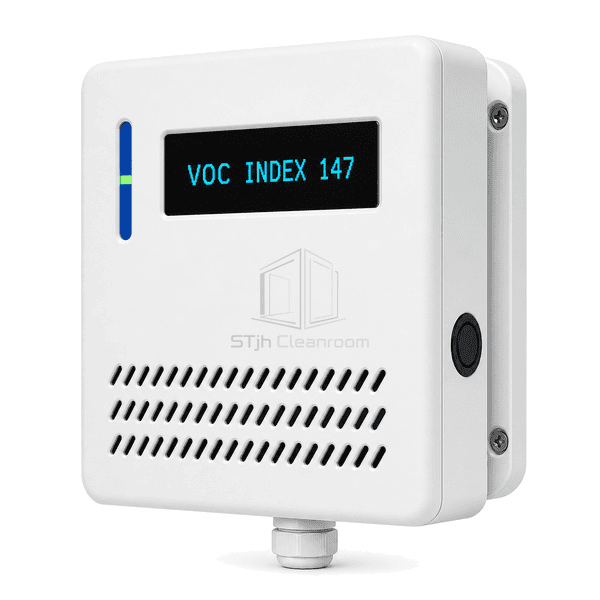
VOC Sensor
A metal-oxide air quality sensor that tracks changing mixtures of volatile organic compounds and provides a compensated trend signal for ventilation or monitoring.
- Metal-Oxide VOC Detection
- Mixed-Gas Trend Signal
- Humidity Compensation
- Ventilation Control Output
Product Introduction
The VOC air quality sensor uses a heated metal-oxide element whose surface resistance changes when reducing or oxidizing organic vapors are present. Embedded algorithms compensate for temperature and humidity effects and convert the raw response into a VOC index or equivalent concentration trend. The device is intended for changes in mixed indoor VOC load rather than identification of one specific compound. A ventilated wall or duct enclosure exposes the element to the monitored air while keeping power and communication terminals protected.
Key Features
Temperature and humidity compensation stabilizes the index across normal room conditions.
A trend-oriented output supports demand ventilation and environmental anomaly detection.
Wall and duct formats place the sensor where solvent or cleaning-vapor changes occur.
Customer Product Concerns
A broad VOC sensor reacts to mixtures and background changes, so it should not be treated as a compound-specific analytical instrument.
Users expect one VOC index to identify an individual chemical.The system presents the reading as a mixed-gas trend and uses compound-specific detectors where selectivity is required.
Humidity changes create an apparent VOC shift during HVAC transitions.Integrated humidity compensation reduces normal environmental cross-sensitivity.
A freshly installed sensor needs time to establish a stable background.Warm-up and baseline handling allow the metal-oxide element to settle before alarm evaluation.
Cleaning spray contacts the sensing surface directly.Protected diffusion openings and appropriate mounting separate the element from liquid droplets.
Typical Applications
Cleanroom solvent-vapor trendingCleaning process monitoringLaboratory air qualityVentilation demand indication
Technical Parameters
Typical construction values for a cleanroom VOC air quality sensor are shown below.
| Core Material | Metal-oxide semiconductor sensing element on FR-4 board in flame-retardant polycarbonate enclosure |
|---|---|
| Panel Thickness | 25-45 mm housing depth |
| Effective Width | 80-120 mm housing width |
| Maximum Length | Up to 150 mm enclosure height |
| Steel Facing Thickness | 0 mm; non-metallic sensor housing |
| Core Density | 1180-1220 kg/m³ for polycarbonate enclosure parts |
| Thermal Conductivity | 0.19-0.22 W/(m·K) for polycarbonate housing material |
| Surface Finish | Matte white housing with blue air-quality indicator and protected vent pattern |
| Joint Type | Snap-fit wall enclosure with rear terminal block and replaceable vent filter |
| Customization | Available based on the intended application and operating environment. |
Available Options
VOC index or equivalent concentration outputWall or duct mountAnalog or digital communicationIntegrated temperature and humidity compensation
Planning a VOC Sensor specification?
Send us your dimensions, installation conditions, performance targets and required surface finish.