
 Inglês
 Alemão
 Língua árabe
 Francês
 Língua indonésia
 Japonês
 Coreano
 Língua malaia
 Portuguêsatual
 Língua russa
 Espanhol
 Tailandês
 Língua turca
 Vietnã

Filtros de ar e filtragem química
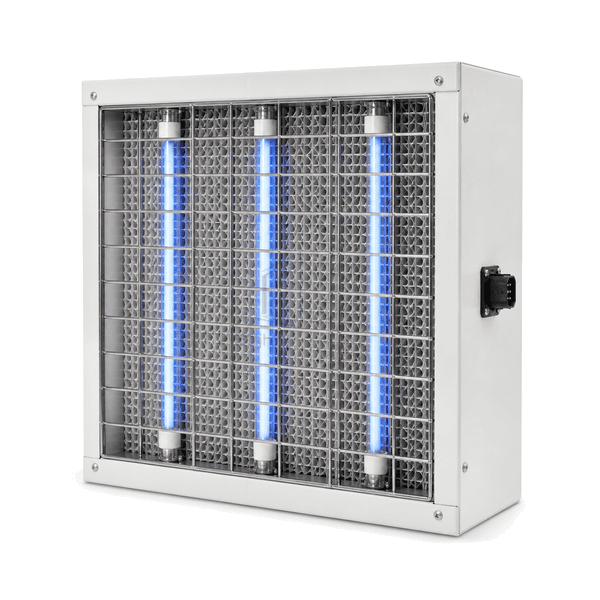
Z Módulo de filtro de oxidação fotocatalítica
A UV-A illuminated titanium-dioxide catalyst module that oxidizes selected low-concentration organic vapours and odours in recirculating air.
- TiO2 Catalyst Surface
- UV-A Activation
- Low-Level VOC Treatment
- Serviceable Lamp Module
Introdução do produto
The photocatalytic oxidation module combines UV-A lamps with a high-area honeycomb or mesh substrate coated in titanium dioxide. When illuminated, the catalyst generates reactive surface species that oxidize compatible organic molecules passing through the module. The rigid metal cassette protects the catalyst, maintains lamp spacing and slides into a dedicated air-treatment housing. Particle prefiltration keeps dust from shading the catalytic surface, while downstream adsorption can capture residual intermediates in demanding applications.
Características-chave
Open honeycomb geometry exposes catalyst area while maintaining moderate pressure loss.
Removable lamp and catalyst sections can be serviced separately.
A metal safety screen shields the illuminated elements from accidental contact.
Preocupações do produto do cliente
PCO performance depends on light intensity, catalyst cleanliness and contaminant residence time rather than filter thickness alone.
Dust coats the catalyst and blocks UV light from the active surface.An upstream fine filter protects the catalyst and extends the cleaning interval.
Air crosses the module too quickly for meaningful oxidation.Catalyst depth, lamp power and face velocity are matched to the intended contaminant load.
Lamp output declines while the system still appears operational.Accessible lamp racks and operating-hour monitoring support scheduled replacement.
Partial oxidation creates intermediate compounds downstream.A polishing carbon stage can adsorb residual vapours after the photocatalytic section.
Aplicações típicas
Laboratory recirculation unitsHealthcare odour reductionOffice and control-room air cleanersFood process support areasLow-concentration VOC polishing
Parâmetros técnicos
Typical construction ranges for a duct-mounted photocatalytic oxidation module are shown below.
| Material principal | Titanium-dioxide-coated aluminum honeycomb with UV-A lamp array |
|---|---|
| Painel de espessura | 100–250 mm catalyst and lamp module depth |
| Largura efetiva | 300–610 mm nominal module width |
| Comprimento máximo | Up to 1220 mm module height or lamp length |
| Aço enfrentando espessura | 0.8–1.2 mm stainless or powder-coated steel cassette |
| Densidade Core | 30–80 kg/m³ apparent density of the coated open-cell catalyst |
| Condutividade térmica | 120–200 W/(m·K) for the aluminum catalyst substrate |
| Superfície acabado | White powder-coated frame with bonded titanium-dioxide catalyst coating |
| Tipo conjunto | Slide-in metal cassette with keyed lamp connector and gasketed housing flange |
| Customização | Disponível com base na aplicação pretendida e no ambiente operacional. |
Opções disponíveis
Honeycomb or expanded-mesh catalystSingle or multiple UV-A lampsUpstream particle prefilterDownstream activated-carbon polishing stage
Planning a Photocatalytic Oxidation Filter Module specification?
Envie-nos as suas dimensões, condições de instalação, metas de desempenho e acabamento de superfície necessário.