
 ภาษาอังกฤษ
 ภาษาเยอรมัน
 ภาษาอาหรับ
 ฝรั่งเศส
 ภาษาอินโดนีเซีย
 ภาษาญี่ปุ่น
 ภาษาเกาหลี
 ภาษามาเลย์
 ภาษาโปรตุเกส
 ภาษารัสเซีย
 ภาษาสเปน
 ภาษาไทยปัจจุบัน
 ภาษาตุรกี
 ภาษาเวียดนาม

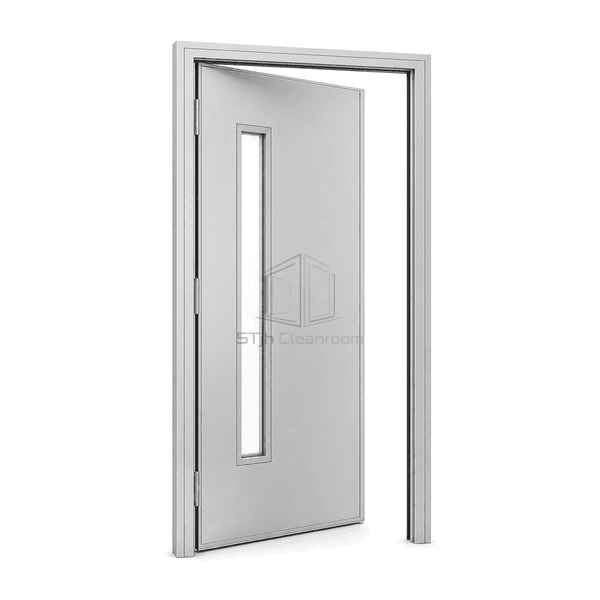
ประตูห้องคลีนรูม, หน้าต่างและระบบ Interlock
ประตูห้องคลีนรูมอลูมิเนียม
A lightweight cleanroom doorset built from aluminum skins, an aluminum honeycomb core and precision-extruded perimeter profiles for humid rooms and frequent manual operation.
- Lightweight Aluminum Leaf
- Corrosion-Resistant Construction
- Extruded Flush Perimeter
- Anodized or Powder-Coated Finish
การแนะนําสินค้า
The Aluminum Cleanroom Door minimizes operating mass by combining thin aluminum faces with an aluminum honeycomb core. Extruded edge and frame profiles hold the leaf square while providing controlled gasket compression around the opening. The all-aluminum exterior is useful in humid interiors where unprotected carbon-steel edges could develop red rust, and the lower weight reduces stress on hinges during frequent personnel movement.
คุณสมบัติที่สําคัญ
Aluminum skins and edge profiles resist interior humidity without red rust.
Honeycomb cells stabilize the panel while keeping the door balanced.
Extruded frame grooves retain replaceable gaskets without exposed clips.
Anodized or powder-coated surfaces can match adjacent cleanroom partitions.
ความกังวลของลูกค้าเกี่ยวกับผลิตภัณฑ์
Aluminum doors address operating weight and humidity, but must still provide a rigid leaf, clean joints and durable hardware fixing points.
Heavy metal doors become tiring during frequent manual passage.Aluminum skins and honeycomb reduce mass while retaining a full-size rigid leaf.
Carbon-steel cut edges corrode in persistently humid interiors.Aluminum perimeter construction removes exposed ferrous material from the room-side edge.
Light panels can loosen around locks and closers.Internal aluminum reinforcement plates provide solid fixing zones for concentrated hardware loads.
Loose stick-on seals detach during cleaning.Profiled gasket channels mechanically retain replaceable perimeter seals.
การใช้งานทั่วไป
Humid laboratory corridorsFood preparation clean areasElectronics assembly roomsAirlocks บุคลากร
รายละเอียดเพิ่มเติม:Light-duty healthcare clean spaces
พารามิเตอร์ทางเทคนิค
Typical aluminum cleanroom door construction values are provided below.
| วัสดุหลัก | Bonded aluminum honeycomb |
|---|---|
| ความหนาของแผง | 40-50 mm door leaf |
| ความกว้างที่มีประสิทธิภาพ | 800-1200 mm single-leaf clear opening |
| ความยาวสูงสุด | 2400 mm maximum leaf height |
| ความหนาของเหล็กหันหน้า | 0 mm steel; 1.0-1.2 mm aluminum leaf skins |
| ความหนาแน่นหลัก | 40-70 kg/m³ aluminum honeycomb |
| การนําความร้อน | 0.06-0.10 W/(m·K) typical honeycomb core range |
| เสร็จสิ้นพื้นผิว | Satin anodized aluminum or polyester powder coating |
| ประเภทร่วม | Extruded aluminum rebated frame with replaceable EPDM perimeter gasket |
| การปรับแต่ง | สามารถใช้ได้ตามแอพพลิเคชันที่ตั้งใจไว้และสภาพแวดล้อมการทํางาน |
ตัวเลือกที่มีอยู่
Natural satin anodized finishPowder-coated RAL coloursFlush vision panelAutomatic drop seal
Planning a Aluminum Cleanroom Door specification?
ส่งมิติของคุณเงื่อนไขการติดตั้งเป้าหมายประสิทธิภาพและผิวที่ต้องการ