 Anglais
 Allemand
 Arabe
Arabe FrançaisCurrent
 Indonésien
 Japonais
 Coréen
 Le malais
 Le portugais
 russe
russe espagnol
 Thaïlandais
 Le turc
 Le vietnamien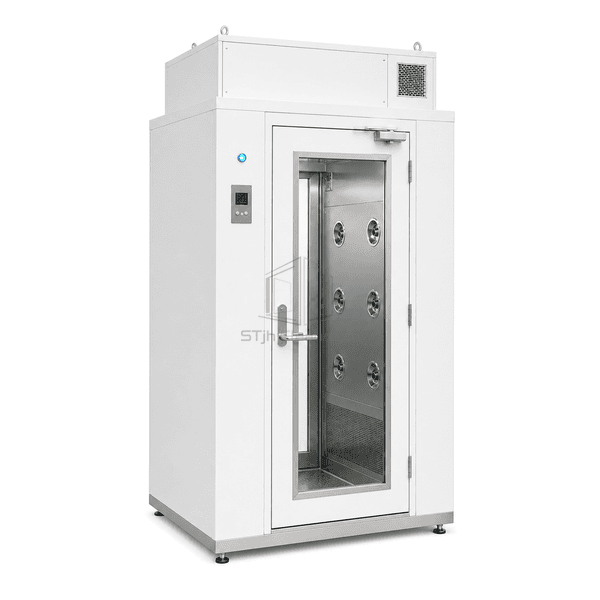
Douche à air de salle blanche unique
A compact enclosed chamber for one operator moving through a controlled entrance.



Help reduce loose-particle carryover before people and materials enter your cleanroom. Explore personnel and cargo air showers with capacities, door arrangements and construction options to fit your entry route and daily traffic.
Start with what enters the chamber and how it moves through the building, then compare capacity, doors, materials and special operating constraints.
| Buyer requirement | Product direction | Why it helps |
|---|---|---|
| Compact personnel entrance | Single-person air shower | Keeps the entry footprint focused on one operator at a time. |
| Higher shift-change throughput | Two-person, multi-person or tunnel layout | Reduces entry queues by increasing usable capacity or cleaning length. |
| Trolleys or wheeled loads | Cargo air shower | Provides door and chamber geometry intended for material transfer. |
| Offset corridor | L-shaped or U-shaped layout | Routes entry around existing walls and circulation constraints. |
| Automated material flow | Sliding-door or roll-up-door cargo model | Supports wider or more automated openings. |
| High-cleanability environment | SUS 304 construction | Offers a durable, cleanable metal surface when suitable for the project. |
| Static-sensitive operation | Ionizing air shower | Adds ionization where charge control is required. |
| Hazardous or cold environment | Purpose-designed special model | Requires project-specific component, safety and operating review. |
Find an air shower that fits your personnel or cargo flow. Compare capacity, layout and construction, then add suitable models to your inquiry list for a tailored quote.
A compact enclosed chamber for one operator moving through a controlled entrance.
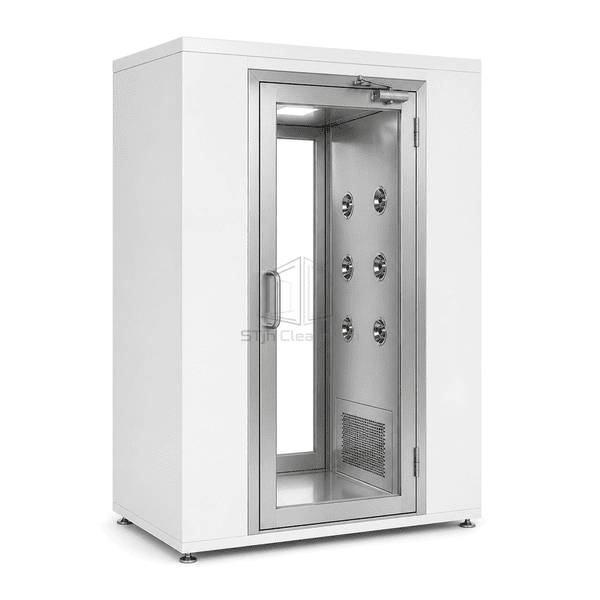
A one-person chamber arranged with opposing blow-off sides for broader surface coverage.
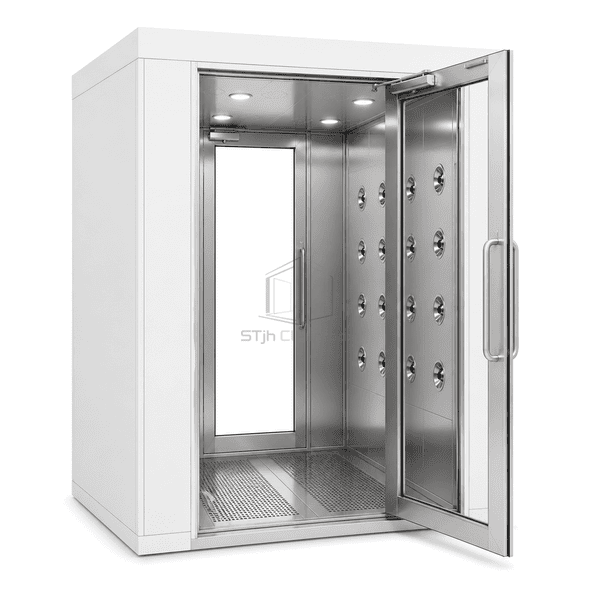
A wider chamber intended to process two operators within one entry cycle.
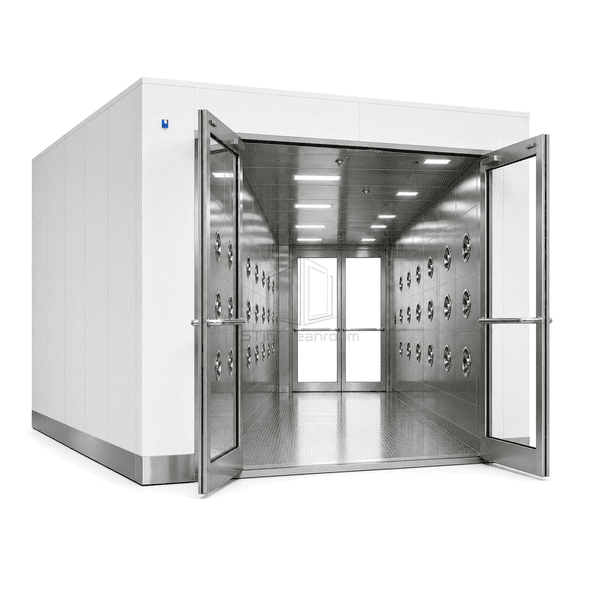
A larger personnel chamber for facilities with higher entry demand or grouped access.
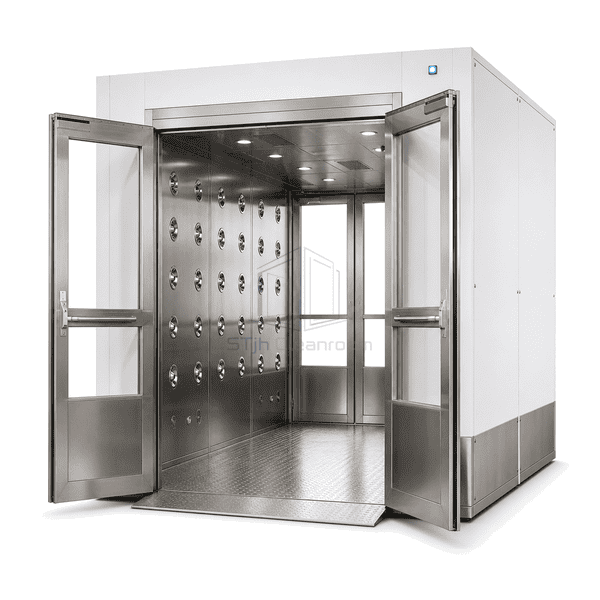
A material-entry chamber sized around trolleys, carts or other wheeled loads.
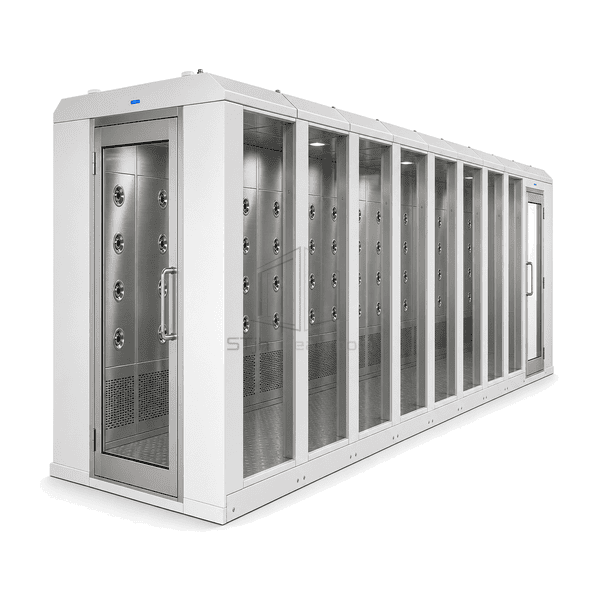
An extended straight-through route for continuous or higher-volume personnel movement.
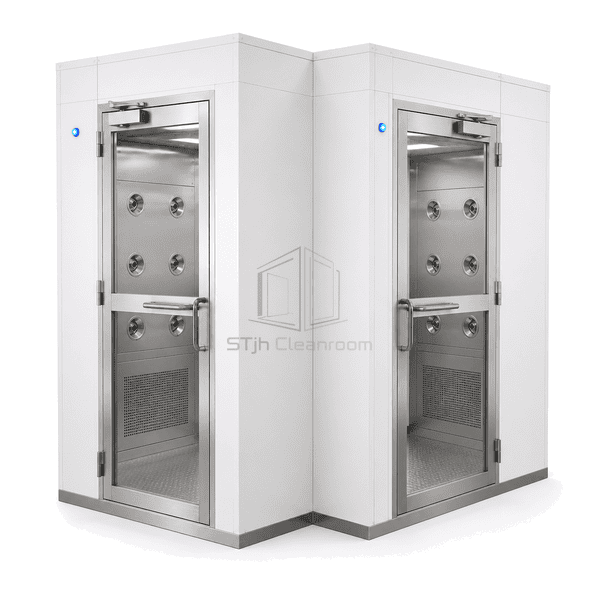
A right-angle traffic route for entrances where straight-through circulation is impractical.
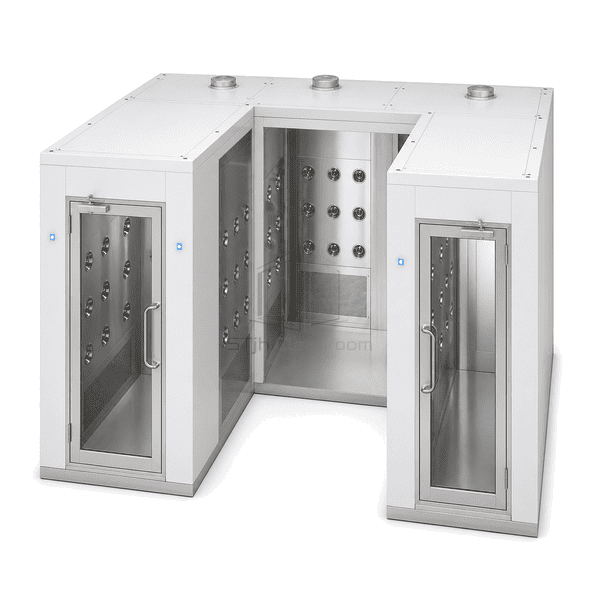
A return-path arrangement for installations that must turn traffic back toward the same side.
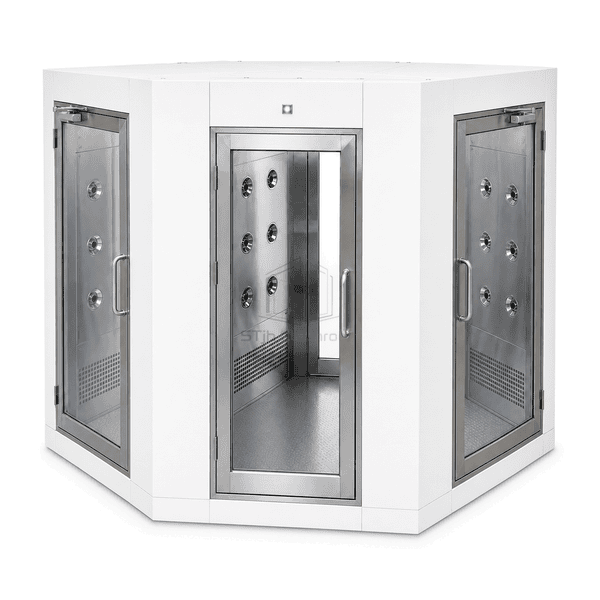
A multi-exit chamber for controlled routing between more than two circulation paths.
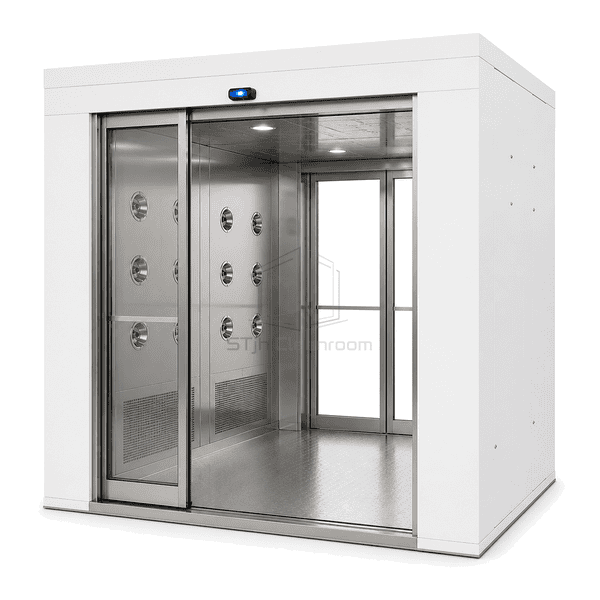
An enclosed chamber using automatic sliding access where swing clearance is limited.
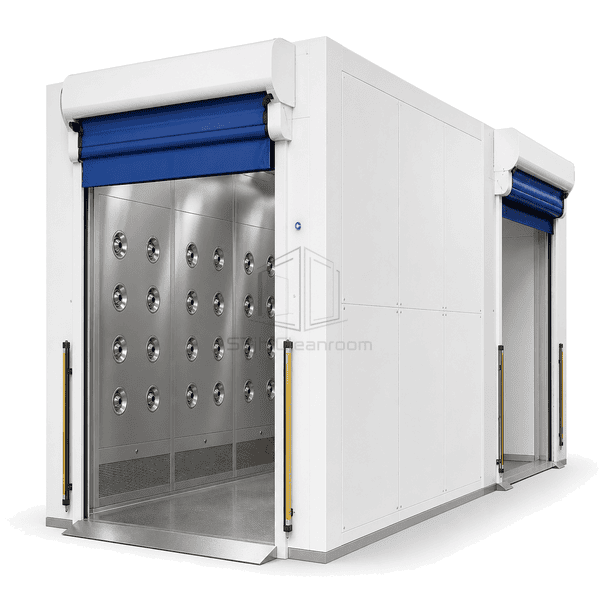
A cargo chamber configured around a wider high-speed roll-up door opening.
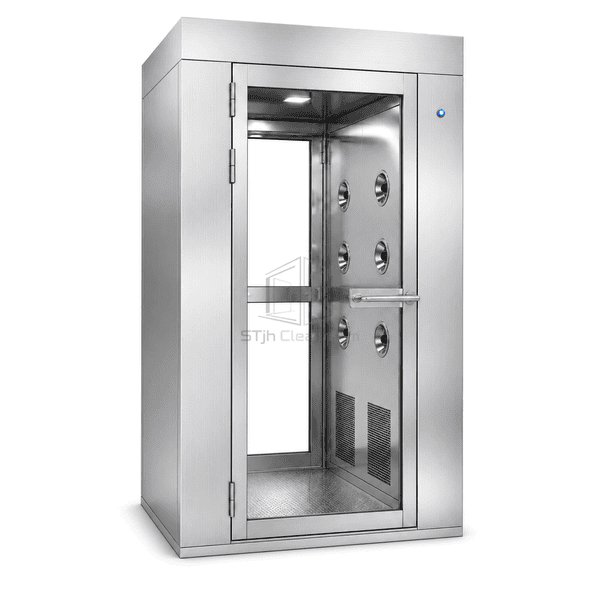
A stainless-steel construction option for projects prioritizing durable cleanable surfaces.
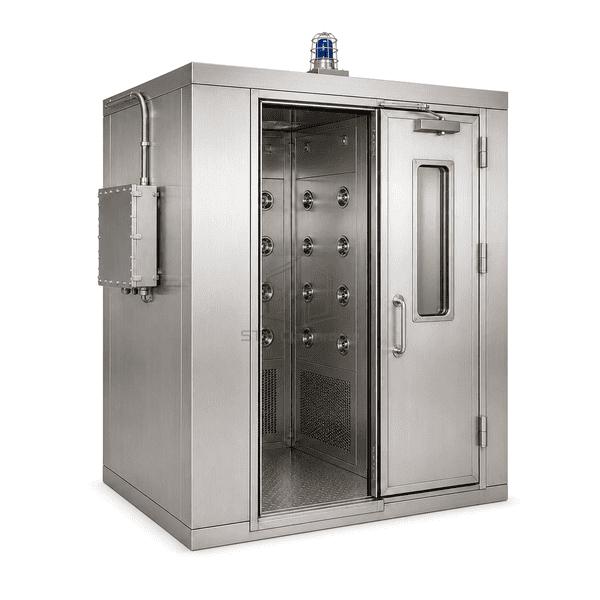
A special-purpose model requiring review of the hazardous-area conditions and components.
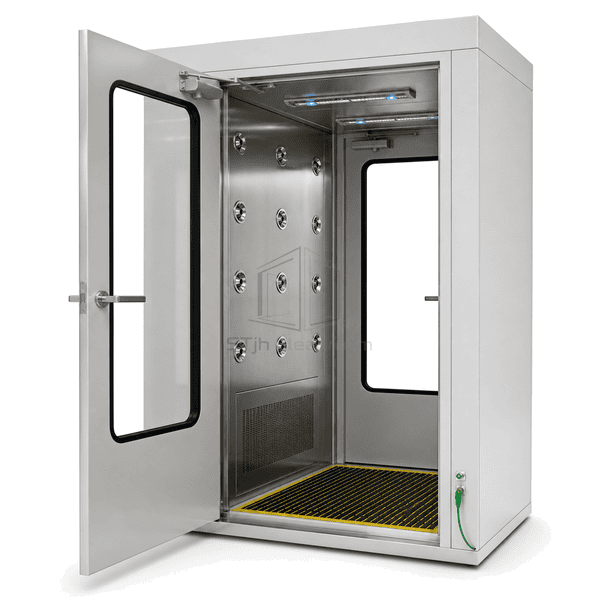
A configuration adding ionization for applications where charge control is required.
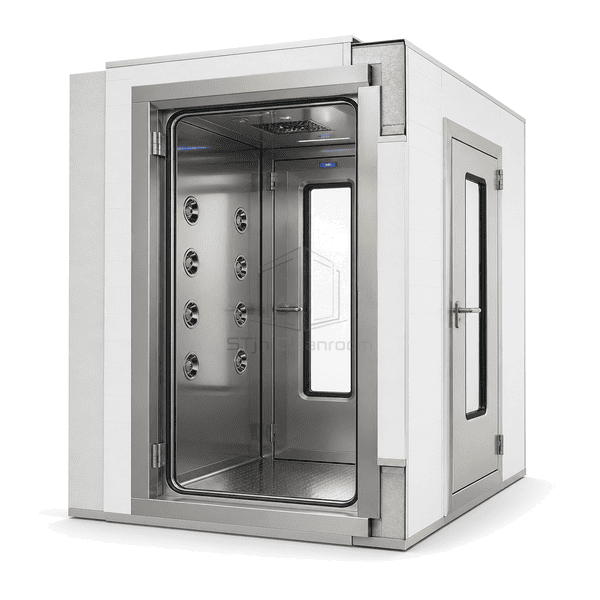
A special model for low-temperature entry conditions with project-specific component review.
High-velocity filtered air helps remove loose particles from garments or load surfaces before the door sequence releases entry to the next zone.
An air shower is not a sterilizer. It should be selected as one part of a wider entry process that can include gowning, hand hygiene, cleaning, pressure control and operating procedures.
No. An air shower is intended to remove loose surface particles with filtered high-velocity air. It does not sterilize people or materials and does not replace cleaning, gowning or process controls.
Consider peak entry demand, shift changes, the number of users or loads per cycle and the available footprint. A larger chamber or tunnel can help when queues would otherwise interrupt operations.
Use a cargo-oriented configuration when trolleys, carts or wheeled loads must pass through. The clear opening, chamber floor, doors and traffic path should be coordinated around the largest intended load.
Many configurations can be adapted around the intended route, opening, construction and operating environment. Final availability should be confirmed against the project requirements.
Add one or more models, adjust quantities in the inquiry list and include your entry layout, load size and operating conditions.