
 Inglés
 Alemán
 El árabe
 Francés
 Idioma indonesio
 El japonés
 Coreano
 El malayo
 El portugués
 El ruso
 EspañolCurrent
 Tailandés
 El turco
 El vietnamita

Sistemas de distribución de aire para salas limpias
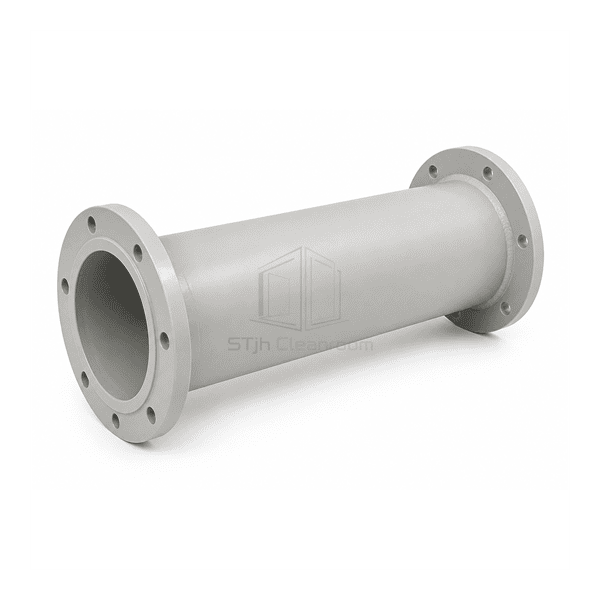
Ducto de escape resistente a la corrosión PP
A welded polypropylene duct system for extracting humid or chemically aggressive air that would rapidly attack ordinary galvanized steel ductwork.
- Chemical-Resistant PP Wall
- Thermoplastic Welded Seams
- Smooth Non-Metallic Interior
- Rectangular or Round Fabrication
Introducción del producto
Polypropylene exhaust ductwork provides a non-metallic path for corrosive vapors from laboratories, chemical rooms and wet processes. Straight sections and fittings are fabricated from homogeneous PP sheet or pipe, joined by hot-gas or extrusion welding to create continuous thermoplastic seams. Round duct is preferred for pressure stability, while rectangular sections integrate with scrubbers and equipment plenums. Supports allow for thermal expansion, and the selected PP grade is matched to the chemical concentration and operating temperature.
Características clave
Thermoplastic welding creates continuous seams of compatible material rather than exposed mechanical folds.
The smooth low-surface-energy interior discourages residue adhesion and simplifies rinsing.
Lightweight fabricated sections reduce support loads compared with thick corrosion-resistant metal systems.
Preocupaciones del producto del cliente
Corrosive exhaust selection must consider the complete chemical mixture, condensate, temperature and thermal movement rather than material name alone.
Acidic condensate removes zinc coating and perforates steel exhaust duct.A compatible PP grade provides corrosion resistance through the full wall thickness.
Rigidly fixed plastic duct buckles as operating temperature changes.Guided supports and planned expansion sections allow controlled axial movement.
Poor field welds leave pinholes in hazardous exhaust seams.Qualified thermoplastic welding and visual seam inspection produce continuous fusion joints.
An incompatible solvent softens the selected plastic.Material selection is checked against the actual vapor and condensate composition before fabrication.
Aplicaciones típicas
Laboratory fume extractionChemical storage-room exhaustWet-process ventilationBattery manufacturing exhaustScrubber inlet and outlet ductwork
Parámetros técnicos
Representative ranges for fabricated polypropylene corrosive-exhaust ductwork are listed below.
| Materiales Core | PP-H polypropylene sheet or extruded pipe |
|---|---|
| Panel de espesor | 3–10 mm, selected by section size and pressure |
| Ancho efectivo | 110–1200 mm round diameter or rectangular side dimension |
| Longitud máxima | 3000–5000 mm per fabricated straight section |
| Acero frente a espesor | 3–10 mm homogeneous PP wall in place of steel facing |
| Densidad Core | Approximately 900–920 kg/m³ solid polypropylene |
| Conductividad térmica | Approximately 0.22 W/(m·K) for polypropylene |
| Superficie acabada | Smooth natural gray PP surface with optional conductive black grade |
| Tipo conjunto | Hot-gas or extrusion-welded seam with welded flange or socket connection |
| Customization | Disponible según la aplicación prevista y el entorno operativo. |
Opciones disponibles
PP-H, flame-retardant PP or conductive PPRound or rectangular geometryWelded inspection openings and drainsExpansion joints and scrubber transition pieces
Planning a PP Corrosion-Resistant Exhaust Duct specification?
Envíenos sus dimensiones, condiciones de instalación, objetivos de rendimiento y acabado superficial requerido.