
 Englisch
 DeutschCurrent
 Arabisch
 Französisch
 indonesisch
 Japanisch
 Koreanisch
 Malaiisch
 Portugiesisch
 Russisch
 Spanisch
 Thailändisch
 Türkischer Sprache
 Vietnamesisch

Reinraum Drainage, Hygiene und Sicherheitsgeräte
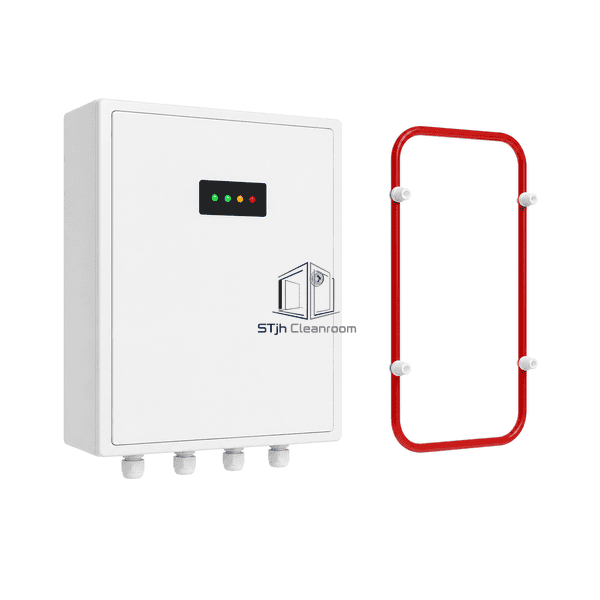
Aspirante Rauch-Erkennungssystem
An active air-sampling detector that draws room air through a pipe network for sensitive, centralized smoke analysis.
- Active Air Sampling
- Multi-Level Early Warning
- Supervised Pipe Network
- Serviceable Central Detector
Produkteinführung
The aspirating smoke detection system uses a monitored fan to draw air from distributed sampling holes through small-bore pipes into a filtered optical sensing chamber. Multiple alarm thresholds can distinguish developing conditions from established fire signatures, while airflow supervision reports blocked or broken sampling lines. Locating the detector cabinet in a serviceable position allows filter and chamber maintenance without opening every cleanroom ceiling point.
Key Features
Configurable thresholds support staged investigation and alarm response.
Airflow monitoring detects pipe blockage, leakage or fan faults.
Replaceable filters protect the optical chamber from background contamination.
Kunden Produktbedenken
Dilution and directional airflow can delay passive detection, while cleanroom access makes frequent ceiling-device maintenance undesirable.
High air-change rates move smoke away from passive ceiling detectors.A distributed sampling network actively transports room air to the sensing chamber.
Very low alarm thresholds can react to harmless background particles.Filtration, reference settings and staged thresholds separate background from developing smoke.
A blocked sampling hole silently reduces coverage.Continuous airflow supervision reports deviation from the commissioned pipe baseline.
Servicing many room detectors disrupts controlled operations.The fan, filter and chamber are centralized in one accessible cabinet.
Typische Anwendungen
Semiconductor cleanroomsPharmazeutische Produktions-SuitenData and control roomsHigh-bay controlled spaces
Technische Parameter
Typical cabinet construction and sampling-network envelope values are listed below; hole sizing and alarm thresholds are engineered for the airflow model.
| Core Material | Powder-coated steel cabinet with polymer sampling pipe and optical sensing electronics |
|---|---|
| Panel Dicke | 1.0-1.5 mm cabinet panels |
| Effektive Breite | 250-500 mm cabinet width |
| Maximale Länge | Up to 1000 mm cabinet height |
| Stahl facing Dicke | 1.0-1.5 mm powder-coated steel enclosure |
| Kerndichte | 7850 kg/m³ for steel cabinet parts |
| Thermische Leitfähigkeit | 45-60 W/(m·K) for steel enclosure components |
| Oberfläche Finish | Smooth light-gray powder coating with status display |
| Gemeinsamer Typ | Gasketed cabinet with supervised push-fit sampling-pipe connections |
| Customisierung | Verfügbar je nach beabsichtigter Anwendung und Betriebsumgebung. |
Verfügbare Optionen
Single or multi-pipe detectorRemote displayNetwork communication moduleCleanroom capillary sampling points
Planning a Aspirating Smoke Detection System specification?
Senden Sie uns Ihre Abmessungen, Installationsbedingungen, Leistungsziele und gewünschte Oberflächenveredelung.