
 ภาษาอังกฤษ
 ภาษาเยอรมัน
 ภาษาอาหรับ
 ฝรั่งเศส
 ภาษาอินโดนีเซีย
 ภาษาญี่ปุ่น
 ภาษาเกาหลี
 ภาษามาเลย์
 ภาษาโปรตุเกส
 ภาษารัสเซีย
 ภาษาสเปน
 ภาษาไทยปัจจุบัน
 ภาษาตุรกี
 ภาษาเวียดนาม

เครื่องแต่งกายห้องสะอาด PPE และอุปกรณ์สิ้นเปลือง
ครอบคลุมบูตห้องสะอาด
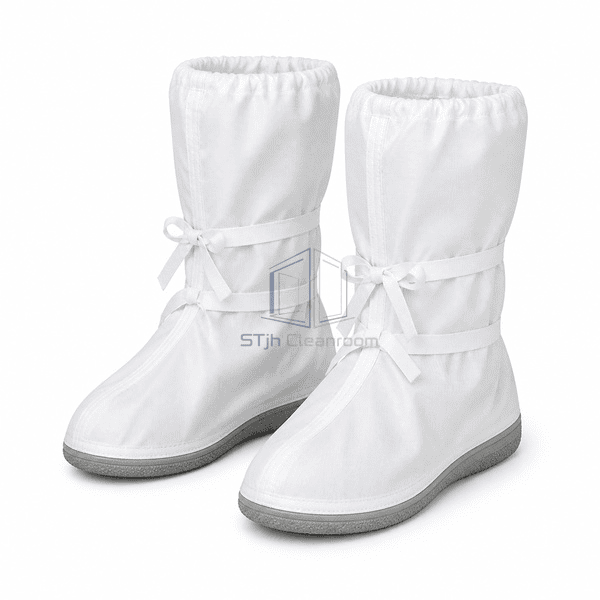
White mid-calf cleanroom boot covers with covered elastic tops, ankle ties, bound seams and gray slip-resistant soles.
- White low-lint fabric extends to mid-calf
- Covered shin elastic and ankle ties stabilize fit
- Gray slip-resistant sole supports controlled walking
การแนะนําสินค้า
Cleanroom Boot Covers provide higher leg coverage than ordinary overshoes for controlled gowning transitions. The white low-lint body encloses the footwear and lower leg, while a covered elastic top and two ankle ties help prevent sagging. A gray slip-resistant sole gives the boot cover a defined walking surface and bound seams keep construction edges contained.
คุณสมบัติที่สําคัญ
Covered shin elastic retains the upper edge without exposed rubber
Two ankle ties secure excess volume around different footwear shapes
Gray textured sole provides a visible traction surface
Bound seams reduce exposed construction edges
ความกังวลของลูกค้าเกี่ยวกับผลิตภัณฑ์
Boot covers must remain upright, secure and correctly oriented through gowning and movement. Loose uppers or poorly positioned ties can drag, while an unsuitable sole can reduce stability.
The upper section may slide down during walking.Use a covered elastic shin opening sized to retain the calf.
Excess material can bunch around the ankle.Secure the two ankle ties after positioning the footwear fully inside.
Ties may contact the floor during donning.Follow a controlled donning sequence that keeps tie ends elevated.
A smooth sole may be unsuitable for polished surfaces.Select a dedicated textured slip-resistant sole for the floor condition.
การใช้งานทั่วไป
Used in pharmaceutical and biotechnology cleanrooms, medical-device manufacturing, laboratories, controlled filling areas and clean processing zones requiring extended footwear coverage.
พารามิเตอร์ทางเทคนิค
These ranges describe common disposable mid-calf cleanroom boot covers. Sterile presentation and sole material should be selected for the actual gowning protocol and floor.
| วัสดุหลัก | Low-lint polyethylene or SMS polypropylene barrier fabric |
|---|---|
| ความหนาของแผง | 0.20–0.30 mm body material |
| ความกว้างที่มีประสิทธิภาพ | 300–380 mm calf circumference by size |
| ความยาวสูงสุด | 460 mm boot height |
| ความหนาของเหล็กหันหน้า | 0 mm; no steel facing used |
| ความหนาแน่นหลัก | 40–55 kg/m³ areal-mass equivalent structure |
| การนําความร้อน | 0.04–0.07 W/(m·K), laminate dependent |
| เสร็จสิ้นพื้นผิว | White low-lint body with gray textured slip-resistant sole |
| ประเภทร่วม | Bound body seams, covered shin elastic and twin ankle ties |
| การปรับแต่ง | สามารถใช้ได้ตามแอปพลิเคชันที่ตั้งใจไว้และสภาพแวดล้อมการทํางาน |
ตัวเลือกที่มีอยู่
Small through extra-large sizes16-inch or 18-inch heightGray gripper or PVC soleElastic ankle or twin tie retentionSterile paired or non-sterile bulk presentationClean-processed double-bag packaging
Planning a Cleanroom Boot Covers specification?
ส่งมิติของคุณเงื่อนไขการติดตั้งเป้าหมายประสิทธิภาพและผิวที่ต้องการ