
 Englisch
 DeutschCurrent
 Arabisch
 Französisch
 indonesisch
 Japanisch
 Koreanisch
 Malaiisch
 Portugiesisch
 Russisch
 Spanisch
 Thailändisch
 Türkischer Sprache
 Vietnamesisch

Luftfilter und chemische Filtration
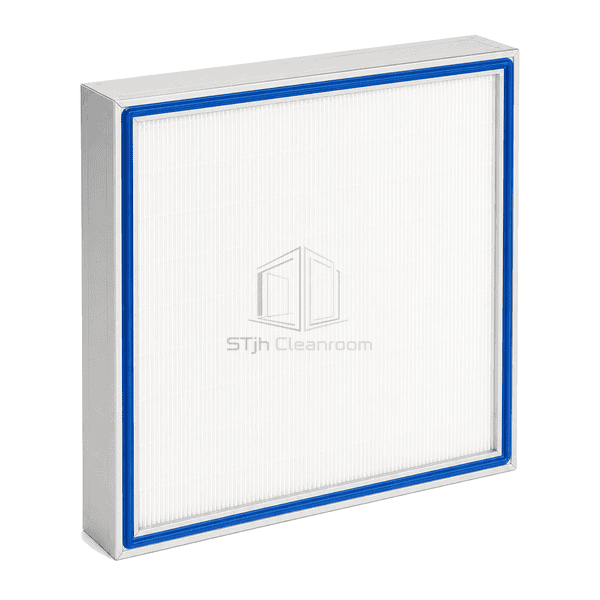
ePTFE Membran HEPA Filter
A cleanroom HEPA panel using expanded PTFE membrane media for low pressure drop, moisture resistance and reduced fibre shedding in sensitive processes.
- Expanded PTFE Membrane
- Low Fibre Shedding
- Moisture Resistant
- Chemical-Tolerant Media
Produkteinführung
The ePTFE membrane HEPA filter uses a microporous expanded-polytetrafluoroethylene layer supported by a stable nonwoven substrate and formed into a mini-pleat pack. The membrane's smooth hydrophobic surface resists wetting and does not release glass fibres into downstream process air. Low-outgassing polyurethane potting secures the pack inside an anodized-aluminium frame, while polymer separators maintain even pleat spacing. The design is suited to pharmaceutical decontamination cycles, semiconductor mini-environments and other processes sensitive to moisture, chemical exposure or fibre release.
Key Features
Hydrophobic filter media withstands brief moisture exposure and recovers without absorbing water into the fibre matrix.
Low-outgassing frame, separator and potting materials suit sensitive manufacturing environments.
The thin membrane pack can provide low initial resistance when matched to the required airflow and efficiency class.
Kunden Produktbedenken
Sensitive clean processes need final filtration that limits fibre release and remains stable when exposed to humidity or periodic decontamination agents.
Glass fibres released from a damaged filter can contaminate a critical process.The supported ePTFE membrane presents a non-fibrous downstream filtration surface.
Condensation temporarily raises the resistance of conventional fibrous media.Hydrophobic membrane media resists liquid-water wetting and supports quicker recovery after moisture exposure.
Cleaning agents attack media binders or pack adhesives.Compatible PTFE, polyurethane and aluminium components are selected for the planned decontamination chemistry.
Molecular emissions from filter materials interfere with a sensitive process.Low-outgassing substrates, separators and potting compounds reduce avoidable material emissions.
Typische Anwendungen
Semiconductor cleanroom ceilingsPharmaceutical aseptic areasWet-decontamination cleanroom terminalsLithography and optics mini-environmentsSensitive laboratory isolators
Technische Parameter
Typical construction ranges for an ePTFE membrane HEPA cleanroom panel are shown below.
| Core Material | Supported expanded-PTFE membrane HEPA media with polymer mini-pleat separators |
|---|---|
| Panel Dicke | 66–90 mm aluminium-frame depth |
| Effektive Breite | 305 - 610 mm Nenngesichtbreite |
| Maximale Länge | Bis zu 1220 mm Nennfläche |
| Stahl facing Dicke | 0.4–0.6 mm powder-coated or stainless-steel protective faceguard |
| Kerndichte | Approximately 18–32 kg/m³ equivalent supported ePTFE media-pack density |
| Thermische Leitfähigkeit | Approximately 0.030–0.040 W/(m·K) for the dry supported ePTFE media pack |
| Oberfläche Finish | Natural anodized aluminium with low-outgassing white or stainless faceguards |
| Gemeinsamer Typ | Continuous PU gel channel, EPDM gasket or extruded knife-edge seal |
| Customisierung | Verfügbar je nach beabsichtigter Anwendung und Betriebsumgebung. |
Verfügbare Optionen
H13 or H14 membrane gradeGel, gasket or knife-edge perimeter sealOne-sided or two-sided protective gridLow-outgassing cleanroom component package
Planning a ePTFE Membrane HEPA Filter specification?
Senden Sie uns Ihre Abmessungen, Installationsbedingungen, Leistungsziele und gewünschte Oberflächenveredelung.