
 ภาษาอังกฤษ
 ภาษาเยอรมัน
 ภาษาอาหรับ
 ฝรั่งเศส
 ภาษาอินโดนีเซีย
 ภาษาญี่ปุ่น
 ภาษาเกาหลี
 ภาษามาเลย์
 ภาษาโปรตุเกส
 ภาษารัสเซีย
 ภาษาสเปน
 ภาษาไทยปัจจุบัน
 ภาษาตุรกี
 ภาษาเวียดนาม

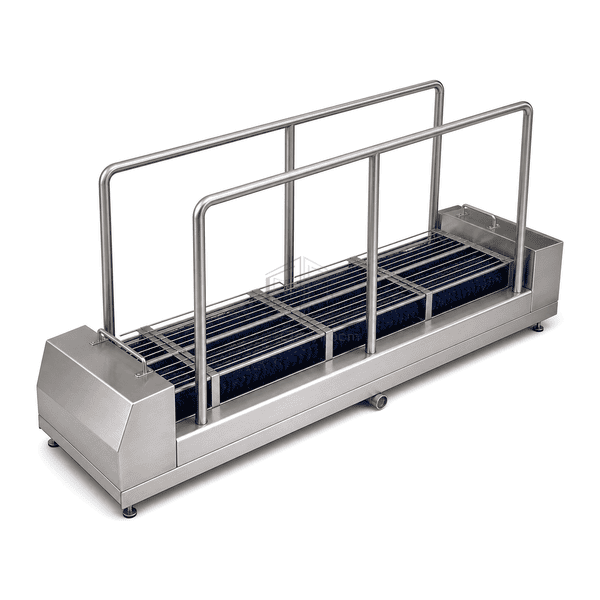
อุปกรณ์กําจัดปนเปื้อนบุคลากรและวัสดุ
ทําความสะอาดรองเท้าแบบ Walk-Through
A walk-through stainless steel cleaner that uses rotating brush tracks to remove loose material from shoe soles during entry.
- Full-sole brush track
- Sensor-start drive
- Controlled liquid application
- Removable brush cassettes
การแนะนําสินค้า
The Walk-Through Shoe Sole Cleaner places counter-rotating cylindrical brushes beneath a guarded entry track so users clean their soles while moving forward. A presence sensor can start the brush drive only for an occupied passage, and a regulated circuit can apply water or a compatible cleaning solution at the bristle zone. The stainless drip pan, brush cassettes and strainers are designed for routine access during cleaning.
คุณสมบัติที่สําคัญ
Presence sensing limits brush operation to occupied entry cycles.
A contained drip pan directs liquid and debris toward an accessible strainer.
Quick-release cassettes let personnel remove brushes without dismantling the handrail.
Dry-brush configurations are available where liquid use is not required.
ความกังวลของลูกค้าเกี่ยวกับผลิตภัณฑ์
Shoe tread can retain loose debris in recessed patterns that a flat contact surface does not reach consistently.
Deep tread grooves remain dirty after contact with a flat mat.Rotating bristles mechanically reach into the tread pattern during the walk-through step.
Workers bypass a separate footwear station during busy entry periods.The brush track is positioned as part of the normal route to the controlled area.
Excess liquid makes the surrounding floor difficult to manage.Metered application and a contained drain pan keep liquid within the brush zone.
Fixed brushes make thorough sanitation of the wet zone time-consuming.Removable cassettes expose the pan and allow brushes to be cleaned separately.
การใช้งานทั่วไป
Cleanroom personnel entrancesFood production hygiene barriersPharmaceutical support areasMedical manufacturing changing roomsControlled packaging facilities
พารามิเตอร์ทางเทคนิค
Brush-track length, liquid arrangement and handrail position can be chosen to suit the entry route and footwear type.
| วัสดุหลัก | Food-grade polypropylene brush cores in a welded SUS304 frame |
|---|---|
| ความหนาของแผง | 1.5–2.0 mm stainless steel body panels |
| ความกว้างที่มีประสิทธิภาพ | 400–800 mm brush-track width |
| ความยาวสูงสุด | 1000–2200 mm overall track length |
| ความหนาของเหล็กหันหน้า | 1.5–2.0 mm SUS304 |
| ความหนาแน่นหลัก | 900–1100 kg/m³ for polypropylene brush cores |
| การนําความร้อน | 0.10–0.22 W/(m·K) for polymer brush components |
| เสร็จสิ้นพื้นผิว | Brushed SUS304 with hygienic welds and non-slip step surfaces |
| ประเภทร่วม | Continuous welded frame with removable sealed brush cassettes |
| การปรับแต่ง | สามารถใช้ได้ตามแอปพลิเคชันที่ตั้งใจไว้และสภาพแวดล้อมการทํางาน |
ตัวเลือกที่มีอยู่
Dry-brush configurationWater or compatible-solution applicationLeft or right handrailEntry-lane length extension
Planning a Walk-Through Shoe Sole Cleaner specification?
ส่งมิติของคุณเงื่อนไขการติดตั้งเป้าหมายประสิทธิภาพและผิวที่ต้องการ