
 ภาษาอังกฤษ
 ภาษาเยอรมัน
 ภาษาอาหรับ
 ฝรั่งเศส
 ภาษาอินโดนีเซีย
 ภาษาญี่ปุ่น
 ภาษาเกาหลี
 ภาษามาเลย์
 ภาษาโปรตุเกส
 ภาษารัสเซีย
 ภาษาสเปน
 ภาษาไทยปัจจุบัน
 ภาษาตุรกี
 ภาษาเวียดนาม

เครื่องกรองอากาศและสารเคมีกรอง
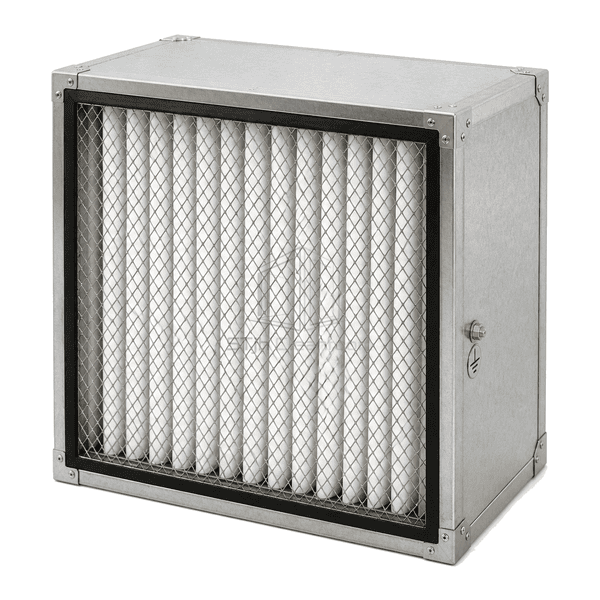
A ตัวกรอง HEPA แบบไม่คงที่สําหรับพื้นที่อันตราย
A conductive metal-frame HEPA filter with antistatic media support and an accessible bonding point for ventilation systems handling potentially combustible dust or vapour environments.
- Conductive Metal Frame
- External Bonding Point
- Antistatic Media Support
- Robust Box Construction
การแนะนําสินค้า
The antistatic HEPA filter for hazardous areas uses a conductive galvanized-steel or stainless-steel box frame, electrically continuous faceguards and a dedicated bonding lug. Glass-microfibre or membrane media is supported by conductive separators or antistatic grids so charge can dissipate through the frame when the filter is correctly earthed in its housing. Continuous pack potting and a conductive or compatible closed-cell gasket control bypass. The construction is intended for engineered dust-control and process-exhaust systems where electrostatic-charge management forms part of the overall hazard-control design.
คุณสมบัติที่สําคัญ
A visible external earth lug allows the installed filter to be connected to the housing bonding network.
Conductive separators or antistatic support grids reduce isolated charge accumulation around the media pack.
A rigid deep box frame protects the HEPA element from vibration and handling in industrial exhaust equipment.
ความกังวลของลูกค้าเกี่ยวกับผลิตภัณฑ์
In a potentially explosive atmosphere, a filter must control fine particles without becoming an electrically isolated component in the ventilation path.
A plastic or isolated frame can accumulate electrostatic charge in a dry dust stream.Conductive metal construction and an external bonding lug provide a deliberate discharge path when correctly installed.
The media faceguard is conductive but not electrically connected to the main frame.Bonded faceguards and conductive supports maintain continuity across the filter assembly.
Industrial vibration loosens a lightweight terminal-panel frame.A reinforced box frame and securely potted pack suit ducted process-exhaust housings.
Operators cannot visually confirm where the filter should be earthed.A clearly accessible bonding stud provides an identifiable connection point on the frame.
การใช้งานทั่วไป
Combustible-dust extraction afterfiltrationSolvent-process exhaust systemsPowder-handling containment equipmentBattery-material production ventilationHazardous-area clean manufacturing
พารามิเตอร์ทางเทคนิค
Representative conductive construction ranges for an antistatic hazardous-area HEPA filter are listed below.
| วัสดุหลัก | Glass-microfibre or membrane HEPA media with conductive separators or antistatic support grid |
|---|---|
| ความหนาของแผง | ความลึกของตัวกรองโดยรวม 150-292 มม |
| ความกว้างที่มีประสิทธิภาพ | 305–610 mm nominal face width |
| ความยาวสูงสุด | Up to 762 mm nominal face height |
| ความหนาของเหล็กหันหน้า | 0.8–1.2 mm galvanized-steel or stainless-steel conductive frame |
| ความหนาแน่นหลัก | Approximately 42–68 kg/m³ equivalent antistatic packed-media density |
| การนําความร้อน | Approximately 0.035–0.045 W/(m·K) for the dry filter media pack |
| เสร็จสิ้นพื้นผิว | Bare galvanized steel or clean conductive stainless steel with bonded faceguards |
| ประเภทร่วม | Conductive gasket or compatible closed-cell gasket with external equipotential-bonding lug |
| การปรับแต่ง | สามารถใช้ได้ตามแอปพลิเคชันที่ตั้งใจไว้และสภาพแวดล้อมการทํางาน |
ตัวเลือกที่มีอยู่
H13 or H14 filter mediaGalvanized-steel or stainless-steel frameConductive gasket or standard closed-cell gasketUpstream and downstream bonded faceguards
Planning a Antistatic HEPA Filter for Hazardous Areas specification?
ส่งมิติของคุณเงื่อนไขการติดตั้งเป้าหมายประสิทธิภาพและผิวที่ต้องการ