
 ภาษาอังกฤษ
 ภาษาเยอรมัน
 ภาษาอาหรับ
 ฝรั่งเศส
 ภาษาอินโดนีเซีย
 ภาษาญี่ปุ่น
 ภาษาเกาหลี
 ภาษามาเลย์
 ภาษาโปรตุเกส
 ภาษารัสเซีย
 ภาษาสเปน
 ภาษาไทยปัจจุบัน
 ภาษาตุรกี
 ภาษาเวียดนาม

ระบบสาธารณูปโภคห้องสะอาด
ตู้ไอเสียเคมี
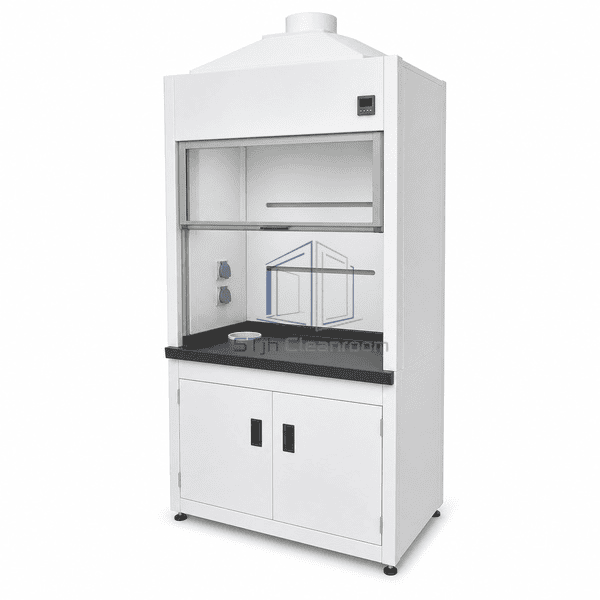
Floor-standing ducted polypropylene chemical exhaust cabinet with a clear vertical sash, smooth work chamber, rear baffle, chemical-resistant worktop and lower service cabinet for corrosive laboratory tasks.
- Welded polypropylene chamber for corrosive chemical service
- Adjustable clear sash and rear baffle support stable capture
- Top duct collar connects to a separately selected exhaust system
การแนะนําสินค้า
The Chemical Exhaust Cabinet is a floor-standing ducted polypropylene fume cupboard that captures vapors at the work opening and conveys them to an external exhaust system. Its white welded polypropylene chamber, smooth rear baffle and chemical-resistant work surface are suited to many acid, alkali and trace-metal laboratory operations. A counterbalanced clear sash provides an adjustable working opening while separating the operator from the process. The displayed cabinet includes one top exhaust collar, one airflow monitor, one light enclosure, two covered service outlets, one small cup sink and a ventilated lower double-door service cabinet. The external fan, duct route, discharge location, face velocity, utilities and chemical compatibility are selected as a complete ventilation system.
คุณสมบัติที่สําคัญ
A vertical clear safety-glass sash provides visibility and a physical barrier at the work opening
The rear baffle distributes extract air across upper and lower capture zones instead of relying on one top opening
A tapered top collar provides a defined connection to the building exhaust duct
The smooth chemical-resistant worktop contains routine drips and supports straightforward decontamination
A local airflow monitor can warn when capture conditions move below the configured operating band
The light is isolated above the work chamber to reduce internal projections and contamination traps
Covered service outlets and remote utility controls keep common connections accessible outside the primary work zone
The lower cabinet separates service routing from the active work chamber and provides removable access panels
Modular widths and service arrangements allow the enclosure to match the intended task and laboratory layout
ความกังวลของลูกค้าเกี่ยวกับผลิตภัณฑ์
A ducted cabinet only contains vapors when the enclosure, room air supply, duct, fan and discharge operate together. Chemical compatibility and airflow behavior must be checked for the actual procedure.
Room drafts or rapid sash movement can pull contaminants out of the work openingLocate the cabinet away from doors and strong diffusers, use a deliberate sash position and balance room supply air with the exhaust demand.
An undersized or high-resistance duct can leave acceptable fan speed but inadequate face captureCalculate the complete duct pressure loss, size the external fan accordingly and verify airflow at the cabinet after installation.
A reagent may attack the worktop, sash seal, duct, fan or service fitting even when polypropylene is compatibleReview the whole wetted and exposed material set against each chemical, concentration and temperature before use.
Large apparatus can block the rear baffle and create stagnant zones inside the chamberElevate bulky equipment where practical, keep baffle slots clear and confirm capture with the intended equipment layout.
Using the lower cabinet for incompatible chemical storage can expose utilities and increase incident severityDefine the base-cabinet function separately and use a purpose-designed, ventilated storage module only for compatible materials.
A display reading can be misleading if the sensor, alarm point or sash position is not maintainedInspect the monitor and sash routinely and verify cabinet containment and airflow using the site's scheduled test method.
การใช้งานทั่วไป
Acid and alkali preparation in analytical and quality-control laboratoriesTrace-metal sample digestion where a metal-free polypropylene interior is preferredWet-chemistry work in pharmaceutical, biotechnology and clean-manufacturing laboratoriesElectronics and semiconductor laboratories handling compatible corrosive reagentsBattery-material, plating and surface-treatment laboratory proceduresGeneral chemical handling that requires ducted source containment rather than recirculation
พารามิเตอร์ทางเทคนิค
The selected catalogue basis is a 1240 mm wide, 800 mm deep and approximately 2450 mm high floor-standing ducted cabinet with an 8 mm white polypropylene body, 980 x 570 x 700 mm nominal work chamber, manual clear sash, phenolic worktop and one top 250 mm-class exhaust collar. The fixed ten-row schema uses panel labels; Steel Facing Thickness therefore records that the welded polymer body has no metal facing. Blower, duct, face-velocity setpoint, sash stop, worktop, sink and utilities remain selectable for the intended procedure.
| วัสดุหลัก | Welded white PP-H chamber and base-cabinet panels with a clear safety-glass sash, removable polypropylene baffle and chemical-resistant phenolic worktop |
|---|---|
| ความหนาของแผง | 8 mm nominal polypropylene carcass and chamber panel thickness for the selected display basis |
| ความกว้างที่มีประสิทธิภาพ | 1240 mm nominal external cabinet width with approximately 980 mm internal working width |
| ความยาวสูงสุด | Approximately 2450 mm nominal overall height including base cabinet and top exhaust connection |
| ความหนาของเหล็กหันหน้า | 0 mm steel facing; the exposed carcass and work chamber are welded polypropylene |
| ความหนาแน่นหลัก | Approximately 915 kg/m³ representative density for PP-H sheet material |
| การนําความร้อน | Approximately 0.22 W/(m·K) for representative PP-H sheet material |
| เสร็จสิ้นพื้นผิว | Smooth porcelain-white polypropylene exterior and chamber, clear sash, dark chemical-resistant worktop and restrained functional control colors |
| ประเภทร่วม | Thermally welded polypropylene carcass seams with gasketed removable baffle, vertically guided sash and flanged top exhaust collar |
| การปรับแต่ง | สามารถใช้ได้ตามแอปพลิเคชันที่ตั้งใจไว้และสภาพแวดล้อมการทํางาน |
ตัวเลือกที่มีอยู่
Cabinet widths of approximately 1000, 1200, 1500 or 1800 mmPolypropylene, phenolic, epoxy-resin or ceramic work surfacesManual or counterbalanced vertical sash arrangementsAlternative clear sash materials for the intended chemical and impact exposureAirflow monitor with local low-flow indication and dry-contact outputRemote water, gas, vacuum and electrical service fittingsCup sink, drip tray and compatible drain connectionVentilated or service-only lower cabinet configurationsExternal corrosion-resistant fan and compatible duct packageTapered exhaust collars and duct sizes matched to the required airflow
Planning a Chemical Exhaust Cabinet specification?
ส่งมิติของคุณเงื่อนไขการติดตั้งเป้าหมายประสิทธิภาพและผิวที่ต้องการ