
 Inglês
 Alemão
 Língua árabe
 Francês
 Língua indonésia
 Japonês
 Coreano
 Língua malaia
 Portuguêsatual
 Língua russa
 Espanhol
 Tailandês
 Língua turca
 Vietnã

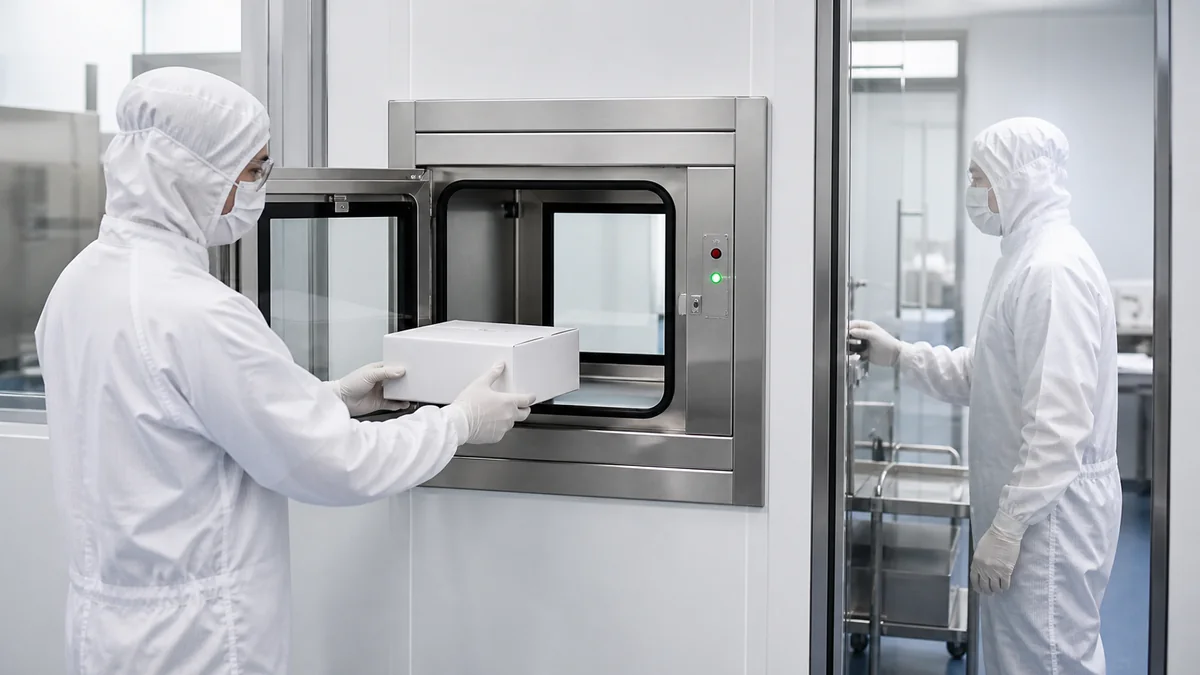
Materials often need to cross a cleanroom boundary without opening a full personnel door. A pass box, also called a pass-through chamber, creates a dedicated transfer opening between two spaces. This separates material movement from personnel traffic and helps maintain a more disciplined contamination-control workflow.
The material-transfer challenge
Every door opening can disturb local pressure and expose the cleaner side to traffic from an adjacent room. Carrying packages through a personnel airlock also mixes two workflows that may have different cleaning and timing requirements. A pass box gives operators a defined place to load, close, transfer and unload items.
Static and ventilated configurations
A static pass box provides an enclosed chamber with interlocked doors and is suitable where active air treatment inside the chamber is not required. Ventilated or dynamic designs add filtered airflow for applications that need an actively controlled chamber. The correct choice depends on room relationship, material type, process risk and operating procedure.
Details that determine usability
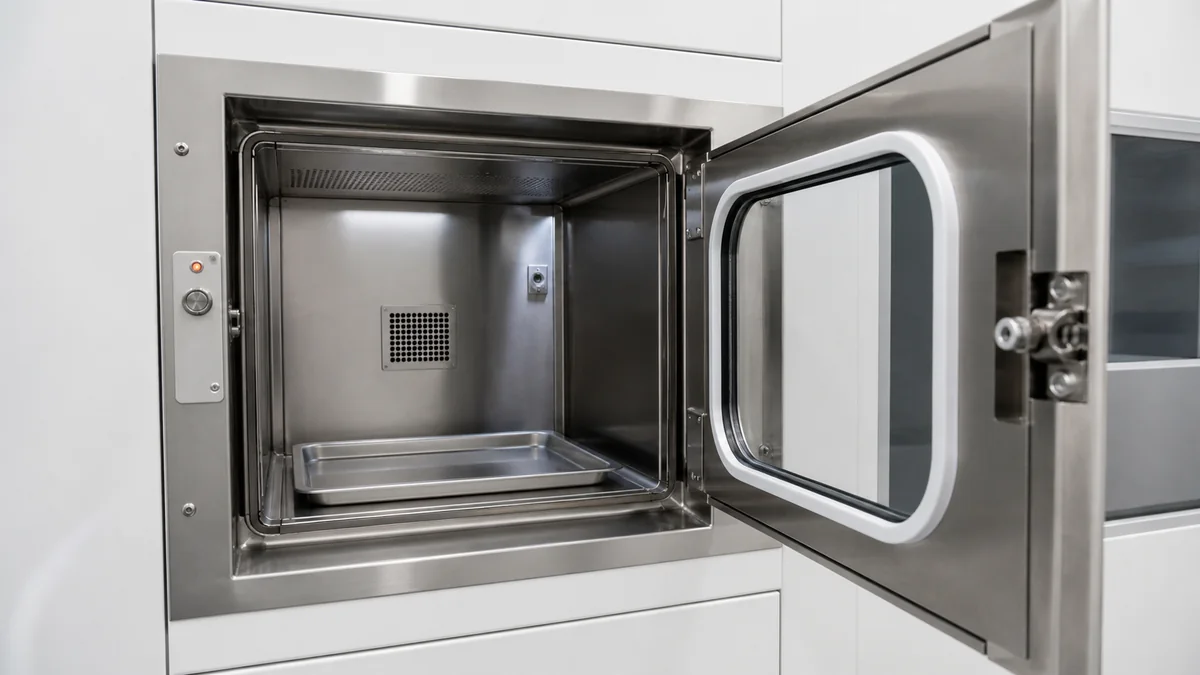
- Clear internal dimensions must accommodate the largest container and allow safe handling.
- Door handing, sill height and wall thickness must fit the actual transfer route.
- Interlocks should prevent both doors from opening together during normal operation.
- Smooth internal surfaces, rounded corners and removable trays can support cleaning.
- For ventilated units, filter access, airflow direction, controls and exhaust or return connections require coordination.
What the pass box helps prevent
It reduces unnecessary personnel-door openings, limits mixed traffic and provides a visible transfer sequence. It also gives project teams a fixed point for cleaning, labelling and responsibility between sending and receiving operators. These operational benefits are often as important as the chamber itself.
Plan the wall interface early
Provide the wall build-up, required flush side, opening size, chamber size, material, door type, control voltage and room-pressure relationship. Coordinating these details before wall fabrication avoids difficult site modifications.
Compare cleanroom pass boxes and transfer equipment, or send your material-flow requirements.