
 Bahasa Inggeris
 Bahasa Jerman
 Bahasa Arab (Bahasa Melayu)
 Bahasa Perancis
 Bahasa Indonesia: Bahasa Indonesia
 Bahasa Jepun
 Bahasa Korea (Bahasa Melayu)
 Bahasa Melayu (Bahasa Melayu)Semasa
 Bahasa Portugis: Bahasa Portugis: Bahasa Portugis
 Bahasa Rusia
 Bahasa Sepanyol: Bahasa Sepanyol: Bahasa Sepanyol
 Bahasa Melayu (Bahasa Melayu)
 Bahasa Turki: Bahasa Turki
 Bahasa Vietnam (Bahasa Melayu)

The room envelope is the physical boundary around the controlled process. Wall and ceiling panels, doors, windows, coving, floors and utility penetrations must create surfaces that are cleanable, durable and sufficiently sealed for the intended pressure relationship.
Why the envelope matters
Air filtration cannot compensate for poorly sealed joints, difficult-to-clean ledges or doors that do not close consistently. The envelope also supports equipment, glazing, pass boxes and services, so its details influence both contamination control and long-term maintenance.
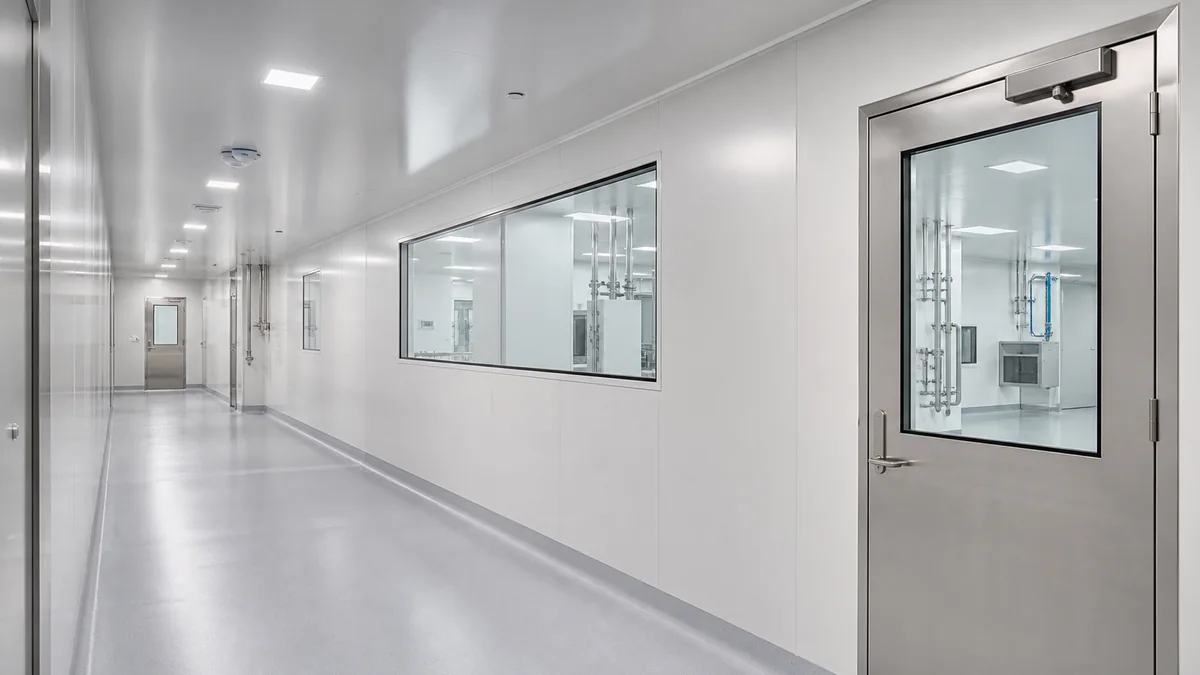
Components that must connect correctly
- Wall and ceiling panels need compatible joints, trims and support systems.
- Doors require frames, seals, hardware and closers suited to the pressure and traffic level.
- Flush windows reduce ledges and allow visibility between controlled areas.
- Coving creates smoother transitions at wall-to-floor and wall-to-ceiling junctions.
- Service penetrations need durable sealing details that remain accessible.
Material selection is application-specific
Panel facing, core material, thickness and finish should be selected for cleaning chemicals, impact risk, thermal needs and fire strategy. Door materials and hardware should reflect traffic, washdown exposure and required access control. Project requirements determine the correct combination; one standard panel is not suitable for every space.
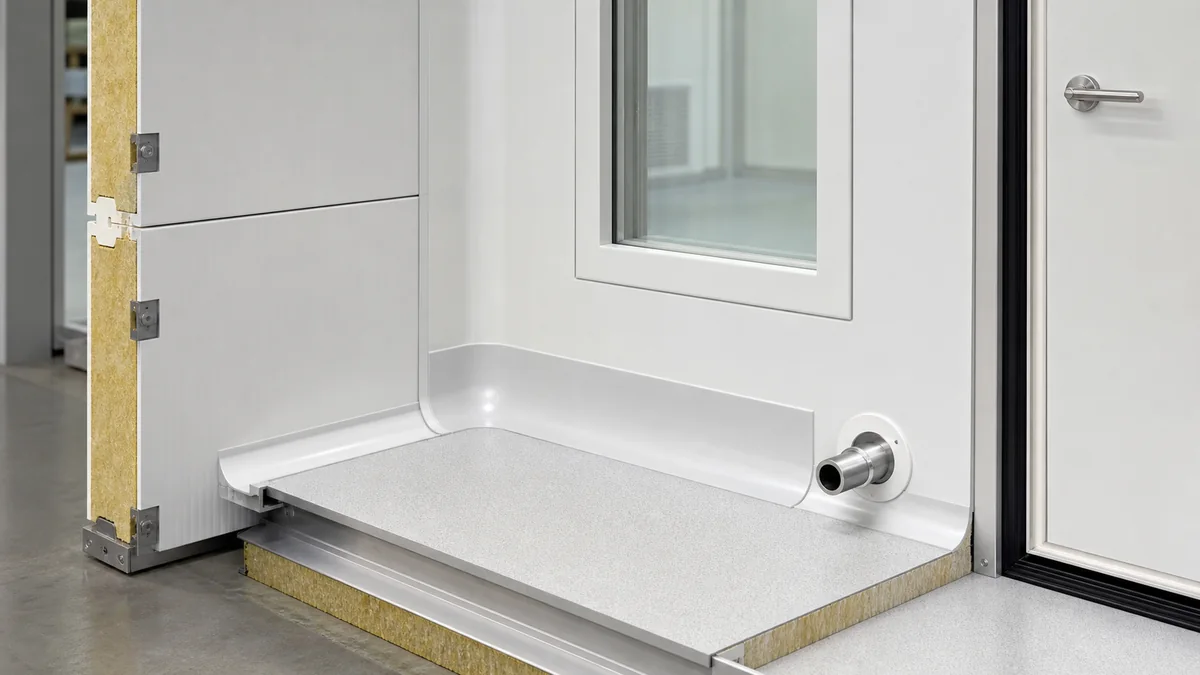
Problems resolved by early coordination
Coordinating openings, panel modules and service locations before fabrication reduces site cutting, misaligned frames and improvised seals. It also helps doors, windows and transfer equipment arrive with compatible dimensions and finishes.
Prepare a room-envelope schedule
List room dimensions, ceiling height, wall thickness, finish requirements, door sizes and handing, window sizes, service openings and any areas exposed to moisture or impact. A room-by-room schedule makes the proposal more accurate and reduces omissions.
Browse cleanroom wall and ceiling systems and cleanroom doors and windows, or send your layout.