
 Englisch
 DeutschCurrent
 Arabisch
 Französisch
 indonesisch
 Japanisch
 Koreanisch
 Malaiisch
 Portugiesisch
 Russisch
 Spanisch
 Thailändisch
 Türkischer Sprache
 Vietnamesisch

A cleanroom air handling unit must support several conditions at the same time: filtered air supply, temperature control, humidity control, room pressure and sufficient airflow for the process. Treating the AHU as ordinary comfort air conditioning can leave gaps between the mechanical system and cleanroom performance.
Why cleanroom air treatment is different
People, lighting and production equipment add heat and moisture. Exhaust systems remove conditioned air. Door openings and leakage paths affect pressure. Filters add resistance that changes as they load. The AHU and its controls must respond to these connected loads rather than only maintaining a room temperature setpoint.
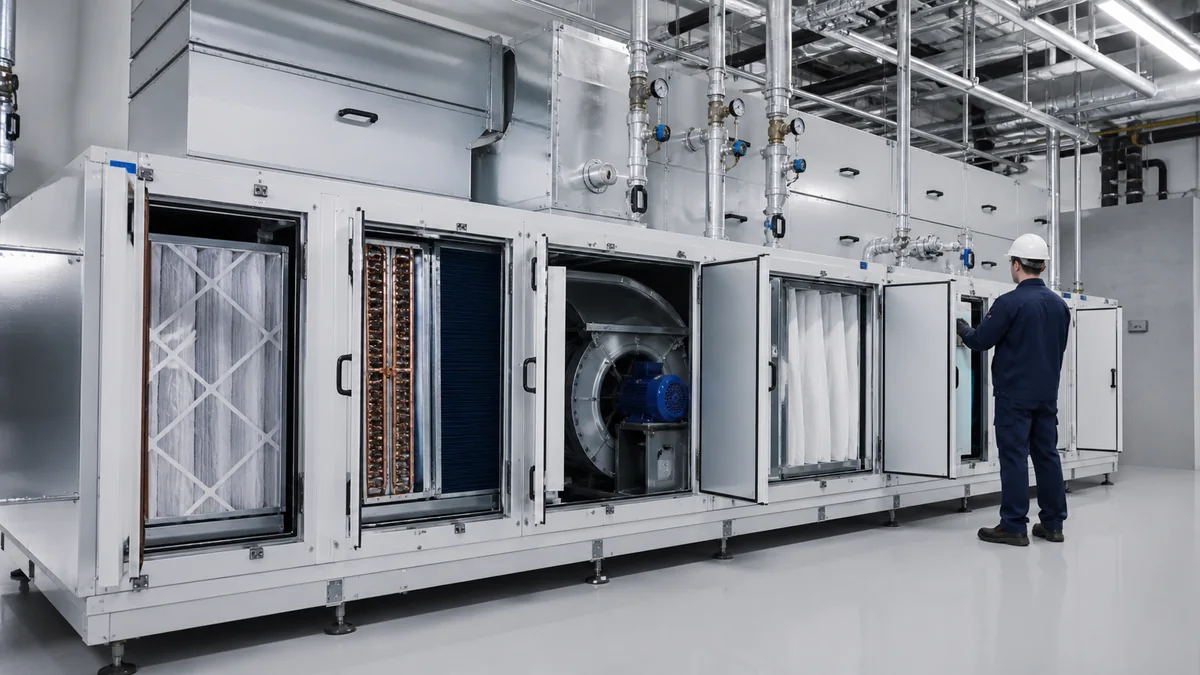
Typical functional sections
A modular unit may include prefiltration, cooling or heating coils, moisture-control components, fan sections, final filtration and sound or vibration treatment. The final arrangement depends on outdoor conditions, return-air strategy, process exhaust, cleanliness objectives and redundancy requirements.
Pressure is a system result
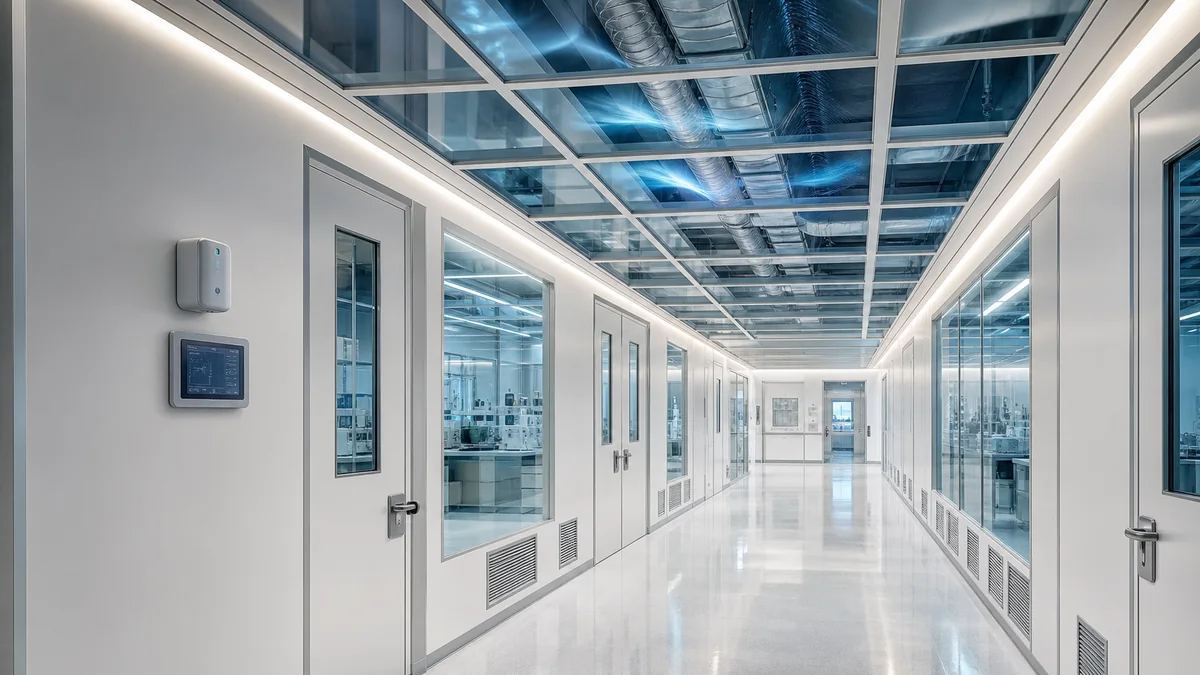
Room pressure is created by the balance between supply, return, exhaust and leakage. Stable pressure therefore requires suitable fan control, accurate dampers, a clear room pressure cascade and doors that seal consistently. A pressure display alone cannot correct an unbalanced air system.
Common coordination problems
- Insufficient allowance for process exhaust or future equipment heat loads.
- Coils and filters placed without practical service clearance.
- Controls purchased separately without an agreed sequence of operation.
- Condensation risk from unsuitable surface temperatures or insulation details.
- Fan capacity selected without the complete system resistance.
Information needed for a useful proposal
Share room dimensions, occupancy, process heat and moisture loads, outdoor design conditions, exhaust volumes, desired environmental ranges, pressure cascade, filtration stages, power supply and space available for service. Final performance should be confirmed from the complete HVAC design.
Explore cleanroom HVAC and air handling equipment, or send your room and process data for equipment coordination.