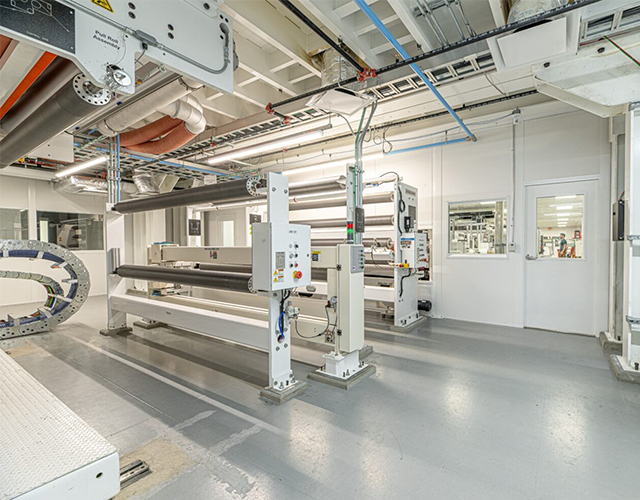
Industrial Cleanroom

Your production line may be humming along, but hidden contaminants can slip in and render fine parts worthless. In the cutthroat manufacturing world, that’s not just a headache, it’s a profit killer. Enter the industrial cleanroom, your secret weapon for controlling contamination and maximizing productivity

Industrial cleanrooms create sterile zones where precision reigns. Builders understand durability and flexibility, ensuring cleanroom investments adapt to expansions or upgrades. The bottom line is simple: this isn’t about constructing a room; it’s about building iron-clad profits. 

These controlled environments aren’t expensive gimmicks but engineered profit multipliers that demand precision and produce results. Factory cleanroom solutions transform noisy shops into profitable workhorses, ensuring every run is a winner.

Industrial Cleanroom

Design of Industrial Cleanrooms

Design begins with one primary goal: complete environmental containment. Dust, particles, microbes—gone. Temperature swings are stabilized, humidity spikes controlled, and airflow held to exact specifications. Companies that skip these measures pay millions in rework and recalls. Those that invest see immediate gains in quality, consistency, and throughput.

Modular arrangements allow factories to scale without gutting budgets, following the rhythm of production. The payoff? Products that impress customers, satisfy regulators, and turn compliance into a competitive advantage. In high-stakes sectors, contamination is not acceptable; it is catastrophic. A single particle can ruin a circuit board or aerospace part, adding thousands in costs.

Modular Construction and Materials

Modular construction enables smarter cleanroom design, with prefabricated panels installed faster than traditional builds. No endless downtime or soaring labor costs, just rapid installation to keep lines running at full output. These systems grow easily, from small test cells to expansive assembly buildings, mirroring growth step for step.

The result is minimal disruption today and maximum flexibility tomorrow.
Durable walls and floors withstand the harshness of factory life: chemical exposure, abrasions, and daily abuse. FRP, PVC panels, and epoxy coatings allow simple wipe-downs without lengthy repairs. Polypropylene resists corrosive agents in high-abrasion areas, ensuring longevity. The right materials turn cleanrooms into fortresses rather than fragile add-ons. Yields rise while maintenance falls, freeing money for innovation.

Environmental Controls

Dedicated HVAC systems with HEPA or ULPA filters remove 99.999% of airborne contaminants. Particle counts drop to ISO specifications, while temperature and humidity remain stable. Add static dissipators, and sensitive electronics are protected from electrostatic discharge that could fry circuits. These configurations not only meet standards but often exceed them, adding 20–30% efficiency during production. Factories see fewer defects, faster cycles, and profits that scale with throughput.

Flexible Configurations

Flexible doors improve workflow, roll-up models handle bulky gear, pass-throughs manage quick handoffs, and airtight seals protect against breaches. Tall walls of up to 20 feet and spans of 30 feet support the largest equipment with load-bearing modular frames.

Customization includes positive pressure for contamination prevention, negative pressure for containment, or zoned layouts for multiple processes. The outcome? Smoother operations, happier crews, and products delivered on time.

Hardwall designs add extra armor for the toughest jobs, integrating seamlessly into existing factories. Whether zoning rooms for parallel processes or fine-tuning pressures for safety, these adjustments pay off in compliance and speed. Industrial cleanroom design is never one-size-fits-all; it is a tailored arsenal for each manufacturing challenge.

Electronics and Optics

Electronics assembly demands pixel-perfect precision, where a single speck of dust can ruin an entire batch. Factory cleanrooms operating at ISO 5–7 protect boards from static and particle damage during soldering and testing. Plants using them report defect rates cut in half, producing more reliable products consumers are willing to pay for. Precision optics follow the same rules, with grit-free fabrication ensuring crystal-clear lenses and sensors.

Aerospace and Automotive

In aerospace, flaws are not an option. Turbine blades or satellite housings must withstand extreme conditions without fail. Cleanroom solutions at ISO 6–8 manage humidity to avoid corrosion during coatings and assembly. Defense programs push containment further, using negative pressure and advanced filtration for top security and precision. Managers report faster certifications, fewer redesigns, and billions saved in program costs.

Automotive components also benefit, with cleanrooms protecting ECUs, paint booths, and coatings for EV batteries. Controlled environments ensure finishes meet demanding OEM specifications the first time. Consistent layers in EV batteries mean extended range, reliability, and fewer recalls. Scrap piles shrink while margins grow in a sector where every dollar matters.

Minimal Downtime

Prefabricated panels go in faster than traditional builds, so lines stay up while the space is installed. As production needs change, cleanrooms can expand or shift without long shutdowns.

Tough Materials for 
Industrial Environments

FRP, PVC, epoxy, and polypropylene hold up against chemicals, abrasion, and heavy use. The surfaces clean quickly and stay intact longer, cutting repairs and keeping the room running.

Compliance as Competitive Edge

When cleanrooms meet ISO 14644, FDA, and OSHA requirements, they face fewer issues during audits. The right design also lowers the risk of fines and helps secure contracts with buyers who insist on documented quality.

FAQs About Industrial Cleanrooms

An industrial cleanroom is a controlled environment that removes dust, particles, and static, protecting sensitive products and equipment. They are critical in sectors like electronics, automotive, aerospace, plastics, and energy storage. By controlling contamination, they boost yields, reduce rework, and cut recalls. In short, they protect profits as much as production.
Electronics and optics manufacturers rely on ISO 5–7 cleanrooms to prevent particle damage to boards and lenses. Aerospace and automotive companies use them for turbines, satellite parts, and EV batteries where flaws are unacceptable. Plastics, solar, and energy firms benefit from better finishes, longer lifecycles, and safer products. Across industries, cleanrooms turn compliance into competitive advantage.
Industrial cleanrooms use durable materials built to withstand daily factory conditions. Walls and floors often feature FRP, PVC, epoxy, or polypropylene to resist abrasion, chemicals, and corrosion. These surfaces are easy to clean, extending lifespan and reducing repair costs. Strong construction ensures the cleanroom is a long-term asset, not a fragile add-on.
With modular construction, installation is fast and minimally disruptive. Prefabricated panels go in quickly, allowing production lines to keep running during the build. Expansions can be added in days, not months, with plug-and-play scalability. Compared to traditional builds, modular systems eliminate costly shutdowns and keep factories productive.

Contact Us

Are you planning a cleanroom project? Talk through the details with one of our experts. We’ll answer your questions and help you get started on a custom design.

Call Us

Call Now →

Book A Meeting

Go to Calendar →

Contact

Leave Your Cleanroom in Expert Hands